


Most “reputation stats” posts are padded with numbers nobody can actually source — a confident-sounding percentage next to a company name that never published it. This is the shorter, honest version: the reputation management statistics that hold up to a source check, why each one should change what you do this month, and the online reputation statistics floating around the trades that you should stop repeating.
If you run a plumbing, HVAC, pest-control, or lawn-care business, three numbers carry most of the weight. They come from actual research — a Harvard economist, a Northwestern research center, and Moz’s ranking-factors survey — not a marketing deck. Everything else is either a footnote or a fabrication.
The one number that settles the ROI argument
A Harvard Business School study by economist Michael Luca — Reviews, Reputation, and Revenue: The Case of Yelp.com — found that a one-star increase in a business’s rating leads to a 5–9% increase in revenue. That’s the whole ballgame for a home-service owner deciding whether reputation is worth the effort.
Run it against your own numbers. A company doing $500K a year that climbs from 3.8 to 4.5 stars is looking at roughly $25K to $45K in additional revenue — not from a new ad budget, just from being the one a homeowner trusts first. The lift isn’t hypothetical marketing math; it’s the measured effect of a higher rating on how many people convert.
This is also where reputation stops being a “marketing” line item and becomes an asset. When Romney Pest Control sold, the 2,337 reviews they’d built directly influenced the sale valuation — reputation showed up on the balance sheet, not just the dashboard. The Harvard number is the annual version of that; the sale price is the terminal version.
What reviews do at the moment of decision
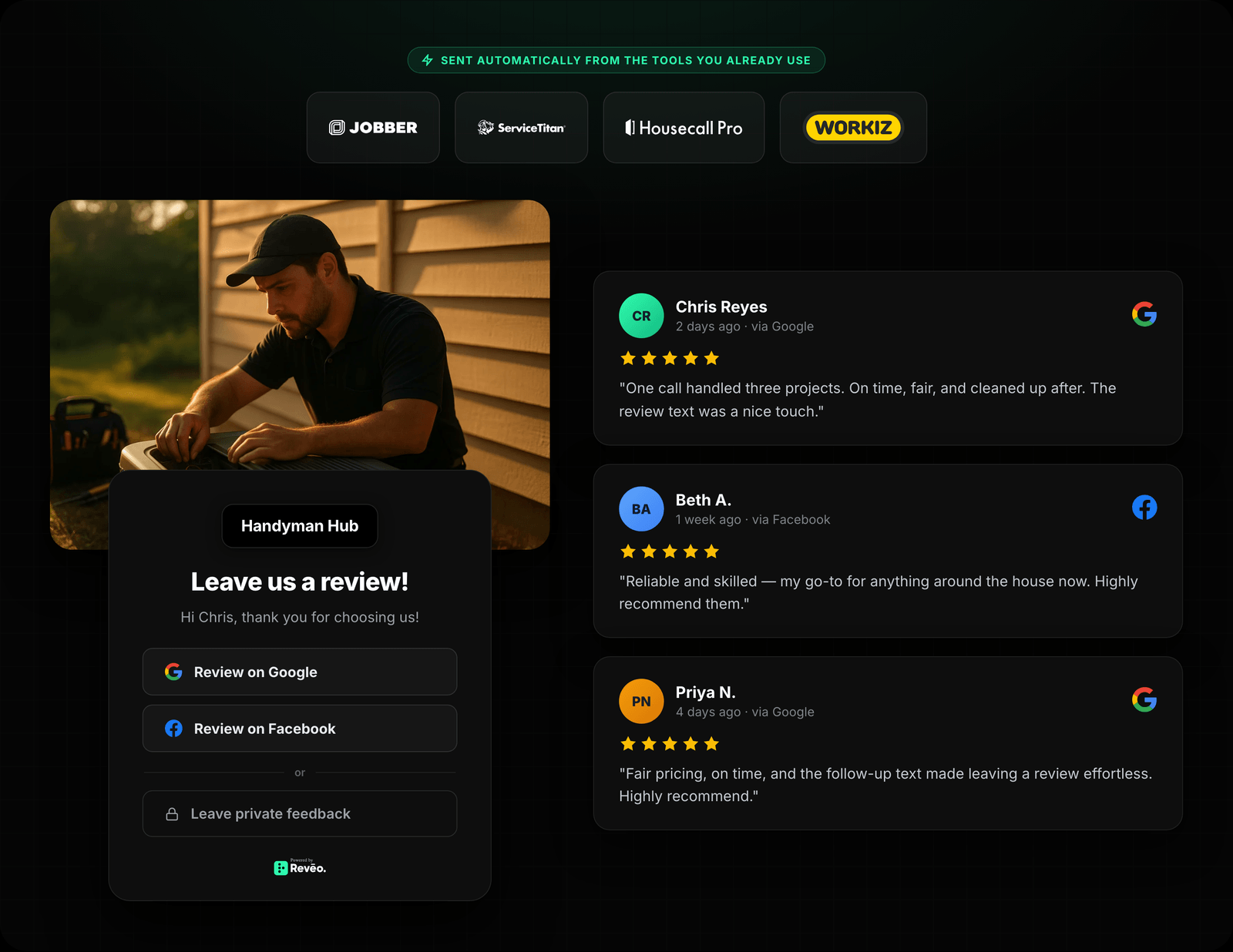
The Spiegel Research Center at Northwestern University ran the definitive study on displaying reviews and found that showing them can lift conversion rates by as much as 270%. The takeaway isn’t “reviews are good” — it’s where they need to live. Reviews sitting only on your Google profile do one job. The same reviews on your service pages, your quote form, and your booking flow do that job everywhere a customer hesitates.
Spiegel also found something most owners get backwards: purchase likelihood peaks when a rating sits around 4.0 to 4.7, not at a perfect 5.0. A flawless score reads as fake to a skeptical buyer. A 4.7 with a couple of handled one-star reviews converts better than a suspiciously spotless 5.0 — which is one more reason responding to negative reviews well beats trying to bury or delete them.
The local-ranking signal, sized honestly
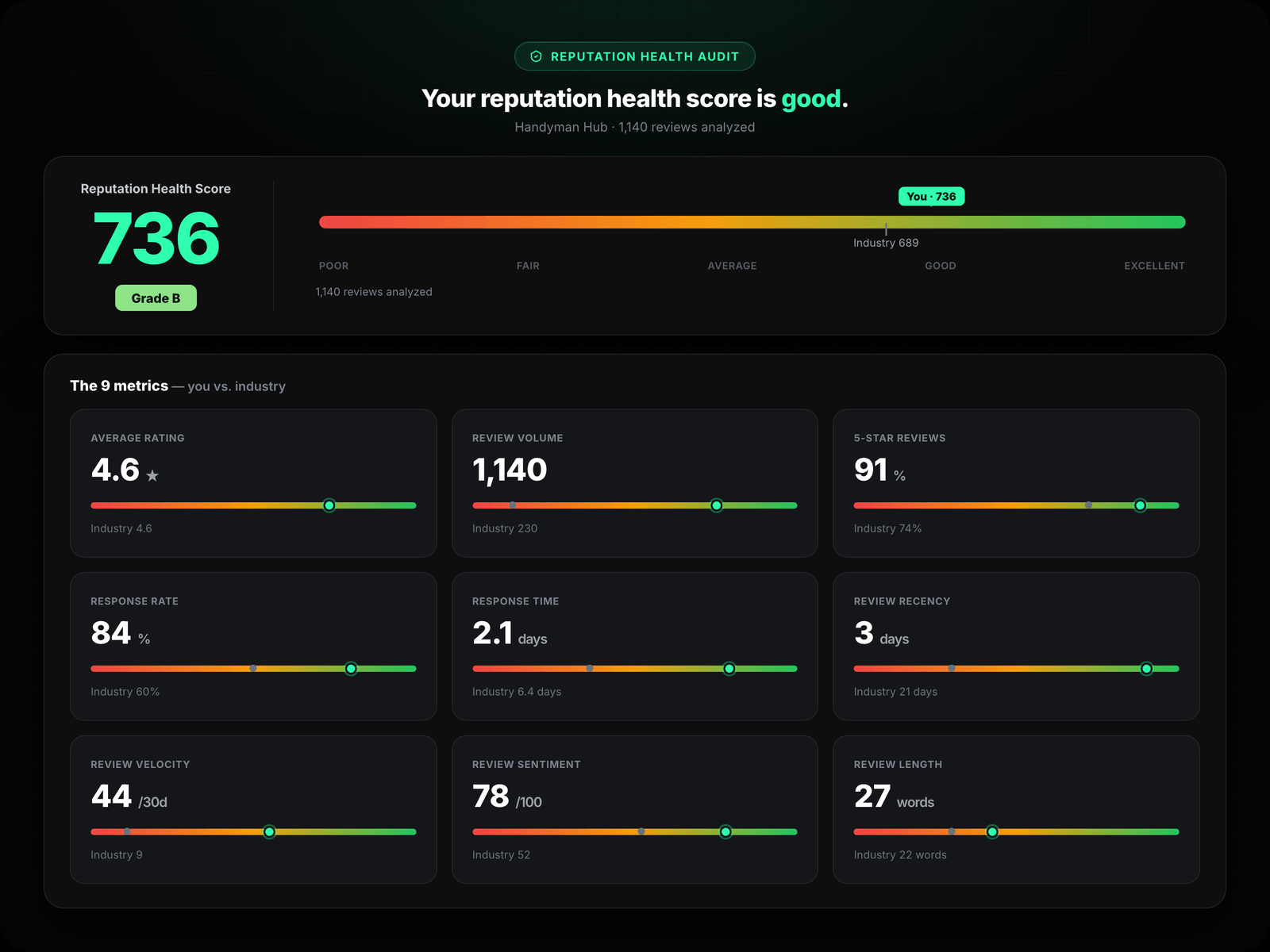
Moz’s Local Search Ranking Factors survey — the long-running expert consensus on what moves the local pack — puts review signals at roughly 15% of local-pack ranking. That’s meaningful, and it’s below the inflated “35%” and “top 3 confirmed factor” figures you’ll see quoted around the trades with no source attached.
Google’s own Business Profile documentation backs the direction without the fake precision: review count and review score factor into local search ranking. Google doesn’t publish a percentage, so anyone who cites one is guessing. What’s documented is enough — more real reviews and a higher score improve your prominence, which is one of the three things Google says drives local ranking. For the platform-specific breakdown, see the Google Business Profile statistics post; for the review-generation side, the review management statistics post.
What buyers actually do before they call

BrightLocal’s Local Consumer Review Survey — the most-cited recurring survey in this space — has found for years that the vast majority of consumers read online reviews for local businesses, and that people read around ten reviews on average before they trust a business enough to reach out. Google is consistently the platform they check first.
That “ten reviews” figure is the practical one. It means a thin profile with three or four reviews doesn’t clear the bar a buyer sets before they’ll even consider you — they’ll keep scrolling to the company with thirty recent ones. Depth and recency, not a single glowing review, is what gets you into the consideration set.
The stats to stop quoting
Here’s the part most “statistics” posts won’t tell you: a lot of the numbers circulating in home-service reputation content are unsourceable. If you’ve seen “56% won’t consider a business under 4 stars — Podium,” “76% ignore manual review requests — GatherUp,” “38% more clicks with 50+ reviews — Whitespark,” or a “+1.4 position bump for responding,” check whether the named company actually published that figure. Often they didn’t, and the number was invented to fill a grid.
Repeating a fabricated stat is a real risk, not a nitpick. Google’s helpful-content system is trained to spot content that reads as generated and unverified, and a homeowner who catches one made-up number stops trusting the rest of your site. The fix is boring and effective: cite the study, or use your own data, or use no number. We’d rather show you five statistics that survive a source check than twenty that don’t.
What the numbers tell you to do
Strip the noise and the real research points at the same short list:
- Get the rating up — the 5–9% is per star. The fastest way is volume of fresh, honest reviews, asked for after every completed job by text. EcoStar Pest Control built 1,015 reviews from a single location doing exactly this; BRD tripled its review velocity in its first 17 days once the ask became automatic.
- Put reviews where buyers hesitate — that’s the 270%. Not just Google. Your service pages, quotes, and booking flow.
- Keep the profile deep and recent — buyers read ~10. A steady monthly cadence beats a one-time sprint. Scoop Soldiers hit roughly 10× their old review velocity by making the request a system instead of a task someone remembered.
- Respond, including to the bad ones — a 4.7 converts better than a fake 5.0.
The pattern across all four: the winners didn’t ask better, they asked every time, automatically. If you want the full system behind these numbers, the online reputation management guide walks through the four moving parts.
Want to see where your own numbers stand? Run a free reputation scan for a snapshot of your reviews, rating, and listings in a couple of minutes — then you’ll know which of these stats is currently working against you.