


Most “review statistics” posts are a wall of numbers with no source and no point. Here are the few that actually change what a home-service business earns — each one real, attributed, and paired with what you should do about it. If you only ever act on three of these, you’ll be ahead of most of your local competition.
We’ve kept this curated on purpose. A comprehensive dump of every review data point lives in our 26 essential review statistics roundup; this page is the shortlist that matters when you run trucks and crews, not a marketing department.
The one stat that shows up on your bank statement
A one-star increase in your rating is worth a 5–9% increase in revenue. That’s the finding from Harvard Business School researcher Michael Luca’s study of Yelp ratings and business revenue — one of the few review numbers backed by a peer-reviewed academic paper rather than a vendor’s blog.
Read that as a direct instruction: the gap between a 3.9 and a 4.6 isn’t cosmetic, it’s a raise. And you don’t close it by begging your best customers for five stars. You close it by asking every customer after every job, so the steady flow of genuine reviews pulls your average up and keeps it there.
People read your reviews before they ever call
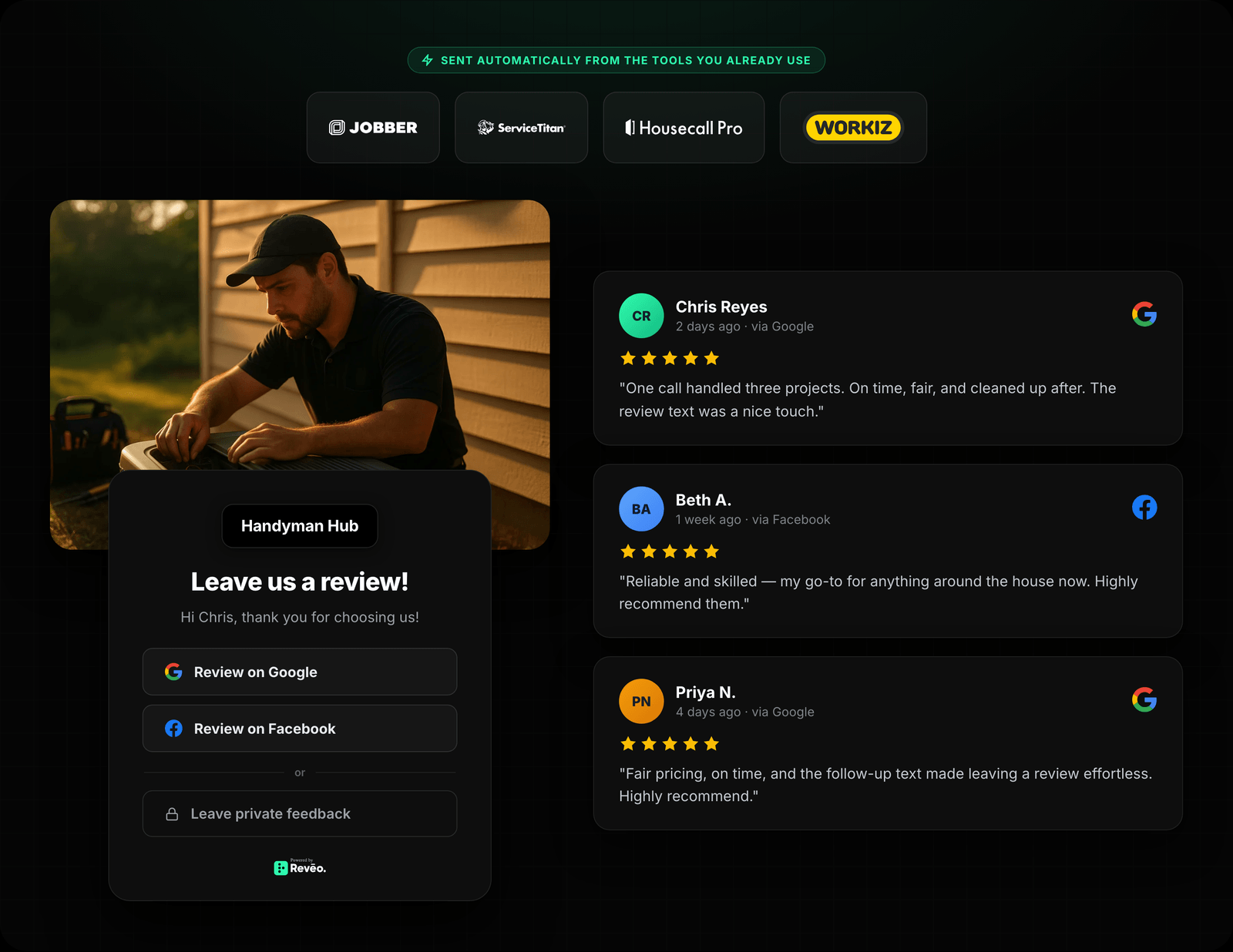
Before a homeowner dials an HVAC company or a plumber, they open Google and skim the reviews. BrightLocal’s annual Local Consumer Review Survey has found for years that the large majority of people read online reviews before choosing a local business — your review profile is the first sales conversation, and you’re not in the room for it.
They also expect you to show up in the replies. 53% of consumers expect a business to respond to a review within a week (ReviewTrackers). That’s not just courtesy — an unanswered one-star review reads to the next customer like you don’t care, and a thoughtful reply reads like you do. Responding is the cheapest reputation work you’ll ever do.
What to do: reply to everything. Thank positive reviewers by name; acknowledge the negative ones calmly and take the detail offline. The audience for a review reply is never the person who wrote it — it’s the next customer deciding whether to trust you.
Putting reviews on your website changes conversion
Reviews don’t only work on Google. A product with five reviews is 270% more likely to be purchased than one with no reviews — from the Spiegel Research Center at Northwestern University. Service businesses aren’t selling products off a shelf, but the mechanism is identical: a visitor deciding between you and the next company converts far more often when real proof is sitting right there on the page.
Here’s the tradeoff most people get wrong. A raw, live-embedded feed that surfaces your occasional three-star review alongside the fives can undercut the trust it’s meant to build. Curate. Put your strongest, most specific reviews on your homepage and service pages — the ones that name the tech, the job, and the outcome.
Reviews and local ranking are the same project
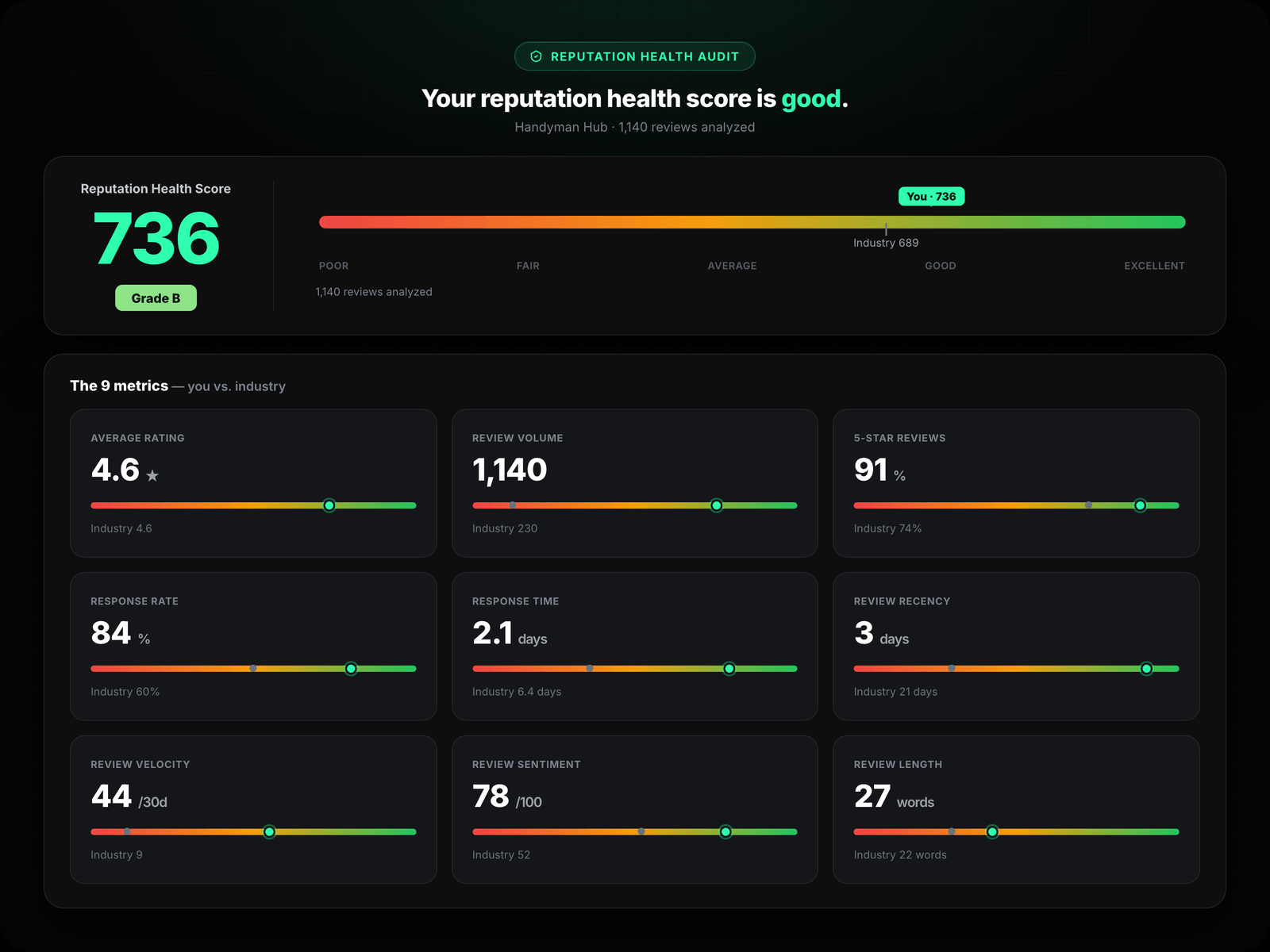
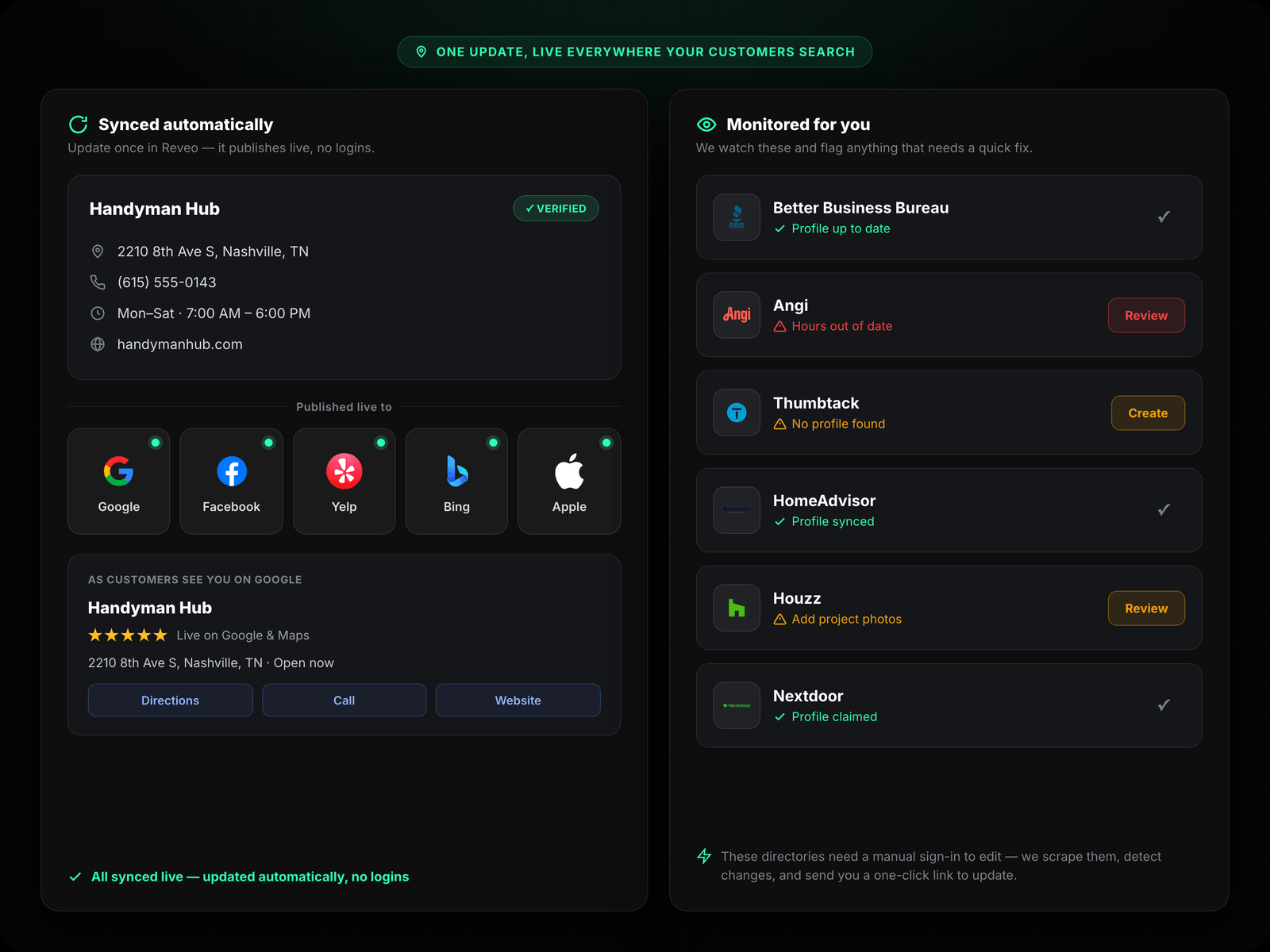
Review signals sit among the strongest local-pack ranking factors in Moz’s Local Search Ranking Factors research — count, recency, rating, and response rate all feed how Google decides who shows up for a “near me” search. For a home-service business where nearly every job starts with a local search, that makes review generation and local ranking one job, not two.
The practical read: a business collecting a few honest reviews every week keeps sending Google fresh signals, while a competitor sitting at 80 reviews from two years ago slowly slides down the pack. Recency is a ranking currency you can only earn by asking consistently.
What these numbers look like in the field
Statistics are averages. Here’s what they turn into when a home-service company actually commits:
- EcoStar Pest Control built 1,015 Google reviews from a single location — owner Pete Updike notes most pest companies in his area sit at 50 to 200, so customers click EcoStar first.
- Romney Pest Control built 2,337 reviews, and that density showed up in the company’s valuation when it sold. Reputation on the balance sheet.
- BRD Pest Control lifted its review velocity 3.4× in its first 17 days on Reveo — same crews, same customers, just a consistent ask.
None of that came from an ad budget. It came from asking every customer, every job, without relying on anyone to remember.
What to do with this
Three moves turn these numbers into results:
- Automate the ask. Fire a text request the moment a job is marked complete, so it lands while the customer is still happy and standing in the result. Timing does most of the work. Here’s how to generate more Google reviews on autopilot.
- Respond within a day. Half of customers expect a reply within a week — beat that and you stand out. Reply to the negative ones first.
- Show your best reviews off Google. Put your strongest, most specific ones on your website and in your marketing, where the 270% effect lives.
Want to see where your reviews, rating, and listings stand today? Run a free reputation scan — it takes a couple of minutes.