


Most Google Business Profile statistics you’ll find online are made up — round numbers with no source, repeated until they sound true. This page is the opposite: every GBP statistic below is tied to a named source (Google, BrightLocal, or the Moz Local Search Ranking Factors survey), and each one comes with what to actually do about it. If a number can’t be sourced, it isn’t here.
Here’s the short version for a home-service owner: your Google Business Profile is where a customer decides whether to call you, and Google’s own published figures show how much a complete profile changes that decision. The rest is knowing which signals move ranking and which move the phone call.
What Google itself publishes about Business Profiles
Google is the most reliable source of GBP statistics, because it’s describing its own product. In its Business Profile materials, Google states that customers are:
- 2.7× more likely to consider a business reputable when it has a complete Business Profile on Search and Maps.
- 70% more likely to visit a business with a complete Business Profile.
- 50% more likely to consider purchasing from a business with a complete profile.
The common word in all three is complete. Not clever, not gamed — complete. Every empty field on your profile is a signal you’re leaving on the table: services, hours, description, categories, photos, Q&A. For a home-service business, “complete” is a one-afternoon job that keeps paying off, which is why we put filling every field at the top of the GBP optimization guide.
What the review research actually says
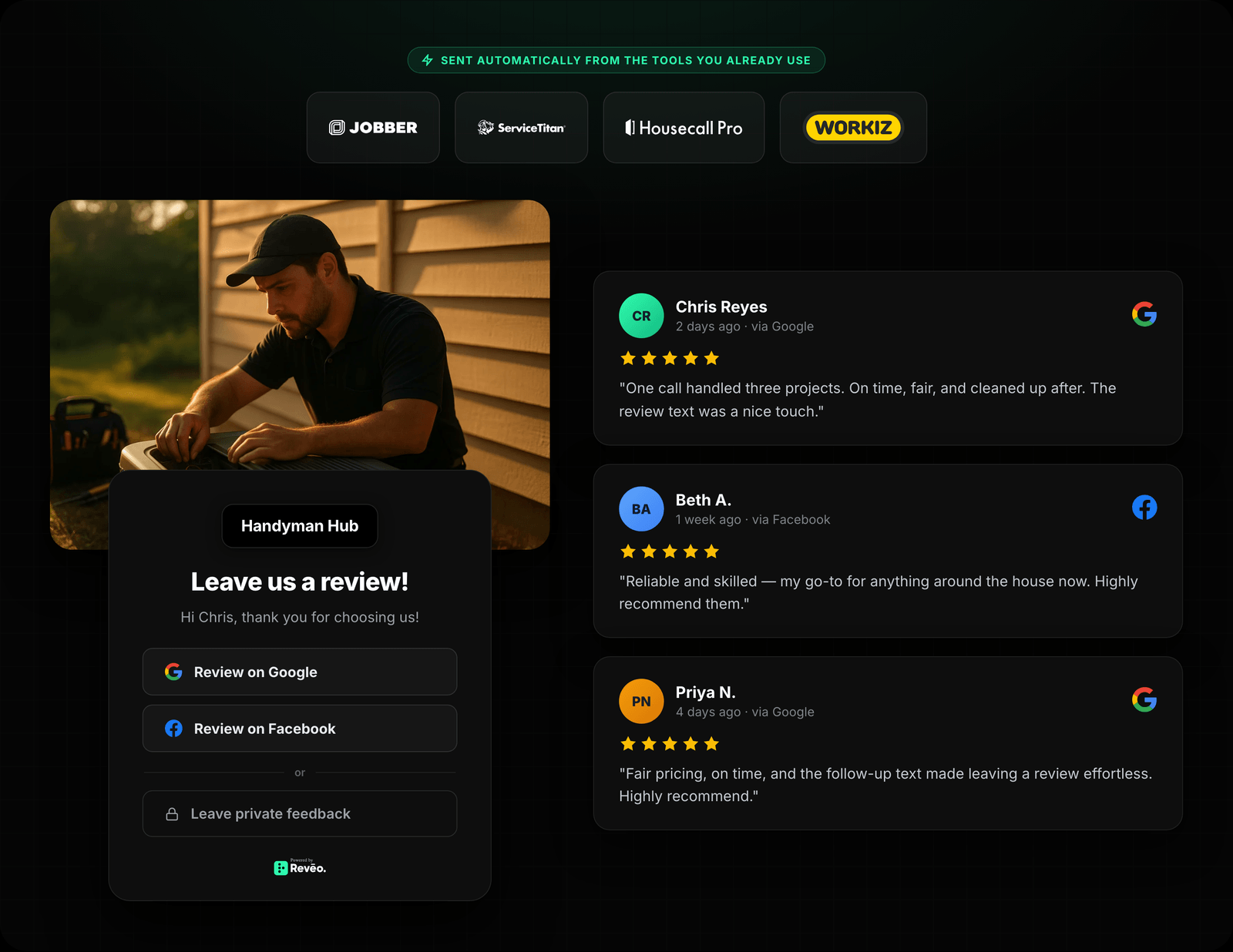
The most-cited GBP statistics are about reviews, and this is where fabricated numbers run wild. What’s genuinely established, from BrightLocal’s annual Local Consumer Review Survey — which has surveyed consumers on local-business habits for over a decade — is the direction, held steady year after year:
- The large majority of consumers read reviews before choosing a local business. This isn’t a niche behavior; it’s the default.
- Star rating acts as a filter. BrightLocal has consistently found that a meaningful share of consumers won’t consider a business below a certain rating threshold — enough that dropping from 4.5 to 3.9 stars quietly removes you from many customers’ shortlists before you ever get a chance to compete.
We won’t hand you a precise “X% of consumers” figure, because that number drifts between survey years and most versions floating around the web are invented. The stable, decision-useful takeaway: recent reviews and a solid rating decide who gets the call. If you want the numbers behind building that flow, the review management guide covers the system.
Where GBP fits in local ranking
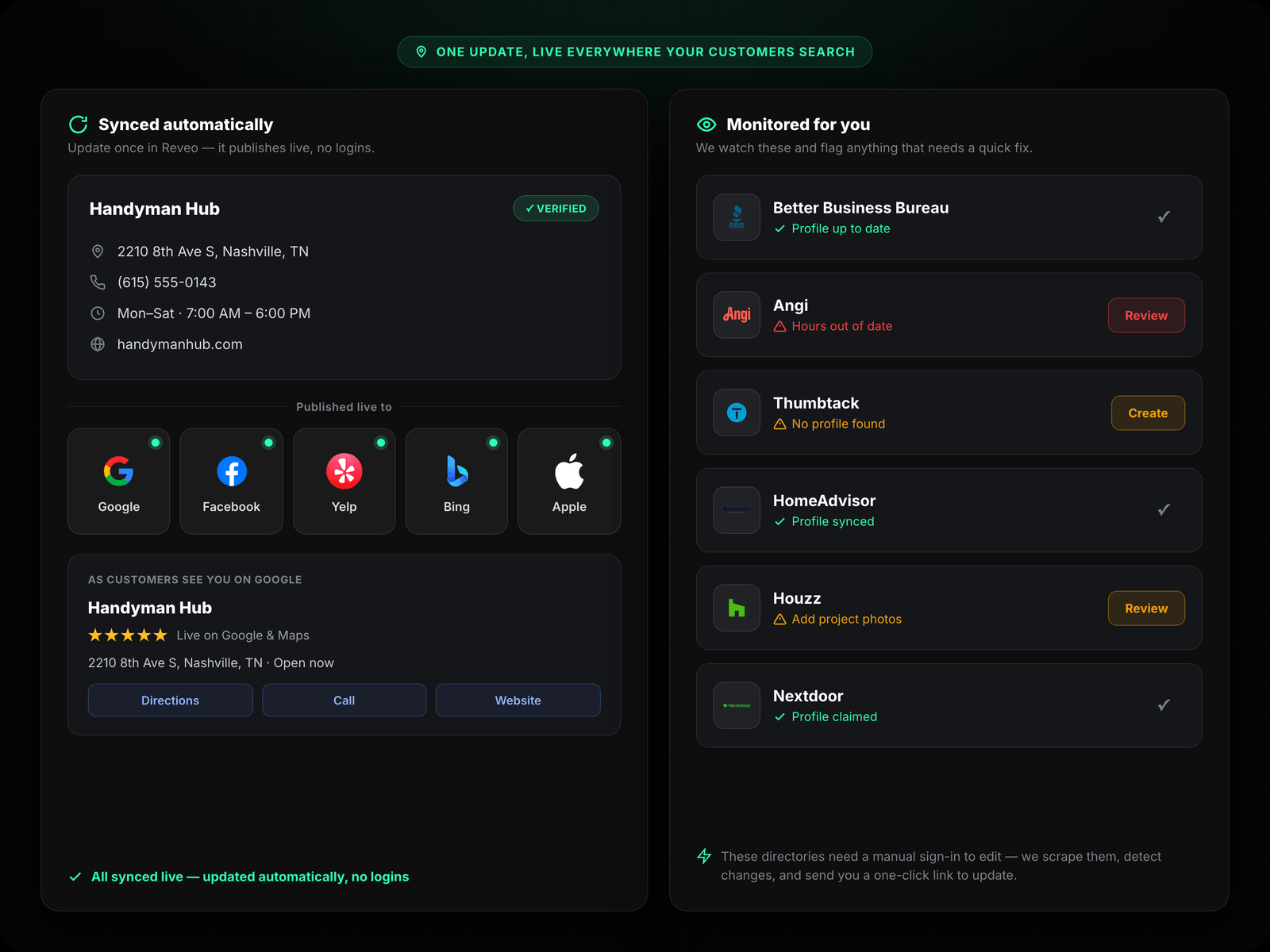
For the ranking side, the credible source is the Moz / Whitespark Local Search Ranking Factors survey, which asks local-SEO practitioners what actually influences the map pack. Across editions, the consistent finding: Google Business Profile signals and review signals rank among the top factors for local pack placement, next to proximity and your primary business category.
Two practical reads from that:
- Your primary category and a complete profile do heavy lifting. Pick the most specific category that fits, and fill the profile out — this is baseline, not advanced.
- Review count, recency, and your responses are the lever you control. Proximity you can’t change. Your review flow you can. Put the effort there. When a bad one lands, how you respond to it is part of the same signal.
What this looks like when a business commits to it

Statistics are the argument; what a home-service company does with a Business Profile is the proof. A few of the operators we work with, with real numbers:
- EcoStar Pest Control built 1,015 Google reviews from a single location. Owner Pete Updike’s point: most pest companies in his area sit at 50 to 200 reviews, so a complete profile with that review density gets clicked first.
- Romney Pest Control built 2,337 reviews across its locations — density that showed up in the company’s sale valuation, not just its marketing.
- BRD Pest Control gained 3.4× its review velocity in the first 17 days after making the request automatic instead of “whoever remembers.”
None of that came from a stat sheet. It came from asking every customer, every job, right after the work is done — which is a system, not a campaign.
What to actually do with these numbers
The GBP statistics that matter all point the same direction. Three moves, in order:
- Complete every field on your profile. Google’s 2.7×/70%/50% figures are all about completeness. This is the fastest win and you can knock it out today — run the GBP checklist against your listing.
- Make review requests automatic. The review research says reviews and rating decide the call; the map-pack research says they move ranking. Fire a text request when a job is marked complete so it goes out while the customer is still standing in a fixed-up home.
- Reply to every review. Recency and owner engagement are part of the review signal, and future customers judge how you handle the bad ones. Set a standard: respond within a day, negatives first.
Do those three consistently and the numbers on this page stop being trivia and start being your pipeline.
Want to see where your profile stands right now? Run a free reputation scan for a snapshot of your reviews, rating, and listings in a couple of minutes.