


The power of online reviews is easiest to see in a home-service business: before a homeowner calls a plumber, an HVAC company, or a pest-control tech, they open Google and read what other people said. Online reviews matter because they quietly decide who gets the call — the company with 300 recent five-star reviews wins the job over the one with 40, before either phone ever rings.
That’s the whole thing. A review isn’t feedback sitting in a dashboard. It’s a sales pitch, written by a stranger, that a homeowner trusts more than anything you could ever say about yourself. Get enough of them and you stop competing on price. Skip them and you’re the second listing nobody clicks.
Reviews are the sales call you never get to attend
A first-time customer forms an opinion of your company in about thirty seconds, and you’re not in the room. They see a star rating, a review count, and the two or three most recent comments. That snapshot decides whether they tap “call” or scroll to your competitor.
Two numbers do most of the work in those thirty seconds. The rating tells them if you’re any good. The recency and volume tell them if you’re still good today — a 4.9 built on 12 reviews from two years ago reads as dead; a 4.8 with a fresh review from last week reads as busy and trusted. For home services, where the buyer is inviting a stranger into their home, that trust signal carries more weight than in almost any other category.
Why reviews matter more for home services than for a shopping cart
Most “power of reviews” advice is written for e-commerce — someone comparing two blenders. Buying a pest-control plan or an emergency plumbing visit is a different animal. The homeowner is choosing who to let through the front door, often under stress (water on the floor, ants in the kitchen, no AC in July). They can’t inspect the product first. The reviews are the product demo.
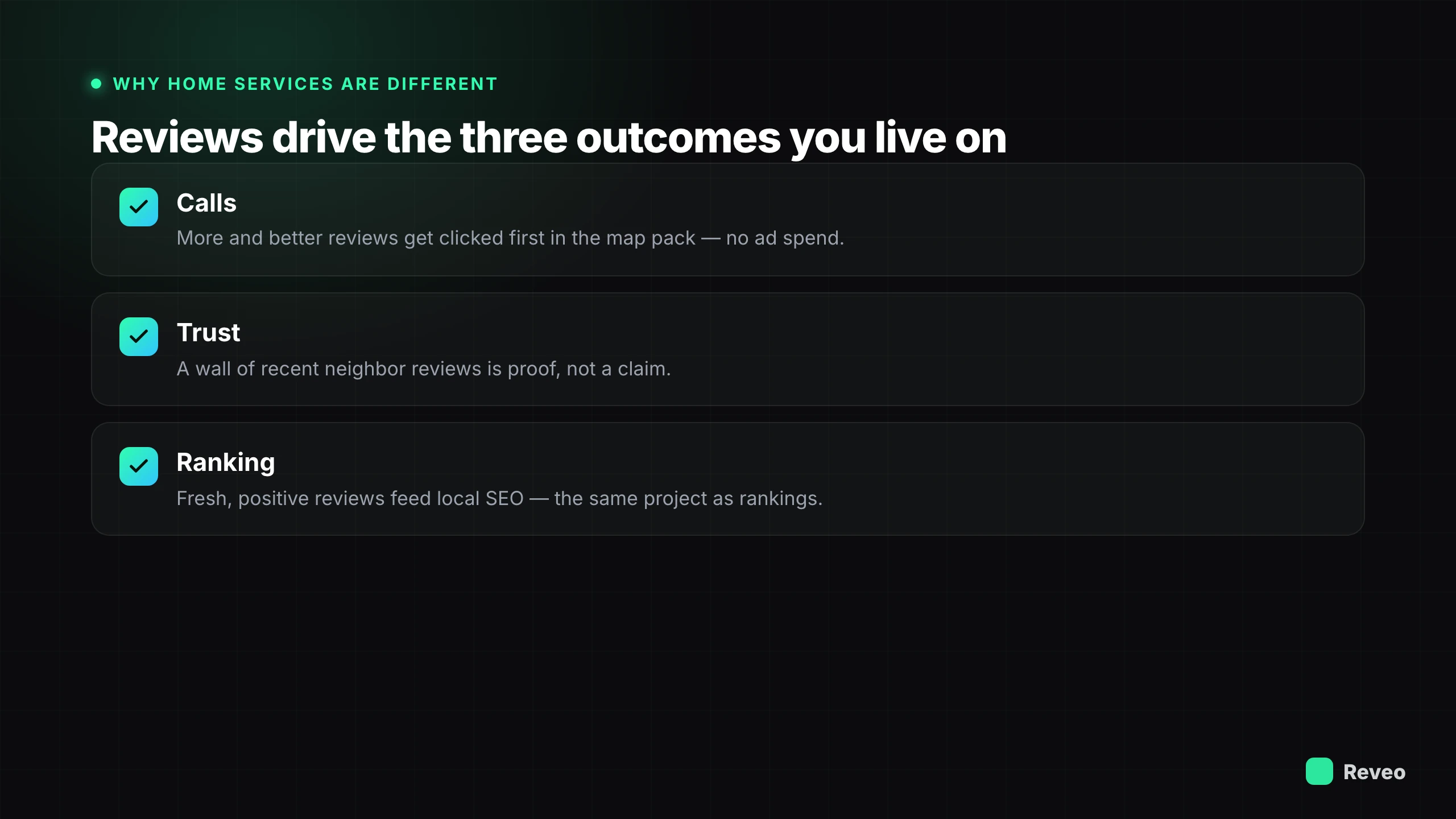
That raises the stakes on three specific outcomes:
- Calls. In the local map pack, the businesses with more and better reviews get clicked first. More clicks, more calls — with no ad spend attached.
- Trust. A wall of recent reviews from real neighbors does what no amount of “family-owned since 1998” copy can. It’s proof, not a claim.
- Ranking. Google treats a steady stream of fresh, positive reviews as a signal that you’re an active, legitimate business, which feeds directly into local SEO. Reviews and rankings aren’t two projects — they’re the same one.
BrightLocal’s annual local-consumer survey has found for years that the large majority of people read reviews before choosing a local business, and that recency matters as much as the star rating itself. If you want the full picture, we pulled the numbers together in 26 online review statistics.
What separates the companies with 1,000 reviews from the ones stuck at 80
The gap isn’t service quality. Plenty of excellent operators sit at 80 reviews because nobody ever asks. Here’s what the companies with real review density have in common — and none of it came from an ad budget.
EcoStar Pest Control built 1,015 Google reviews from a single location. Owner Pete Updike’s point is blunt: most pest companies in his area have 50 to 200 reviews, so when a homeowner searches, EcoStar is the obvious pick before anyone reads a word.
Legion Pest Control reached 994 reviews in 24 months and now barely thinks about it. As Brandon Jamison puts it, “I look at the dashboard once a week. The system runs itself.”
Romney Pest Control built 2,337 reviews across its footprint — and when Greg Romney sold the company, that review density directly influenced the valuation. Reputation showed up on the balance sheet, not just the marketing report.
Scoop Soldiers, a pet-waste-removal franchise, saw review velocity jump 10× once they stopped relying on techs to remember the ask. BRD, a pest-control company with 30,000 customers, tripled its review pace (3.4×) in the first 17 days.
The common thread: they made the ask a system, not a good intention. They didn’t ask better — they asked every customer, every job, automatically. That’s the entire difference.
The one behavior that compounds everything
If reviews are so obviously valuable, why does the average home-service company have 40 of them? Not laziness — memory. The tech finishes the job, gets in the truck, and the request that would’ve taken ten seconds never happens. Repeat that a few thousand times and you’ve got a competitor with a wall of reviews and you’ve got a handful.
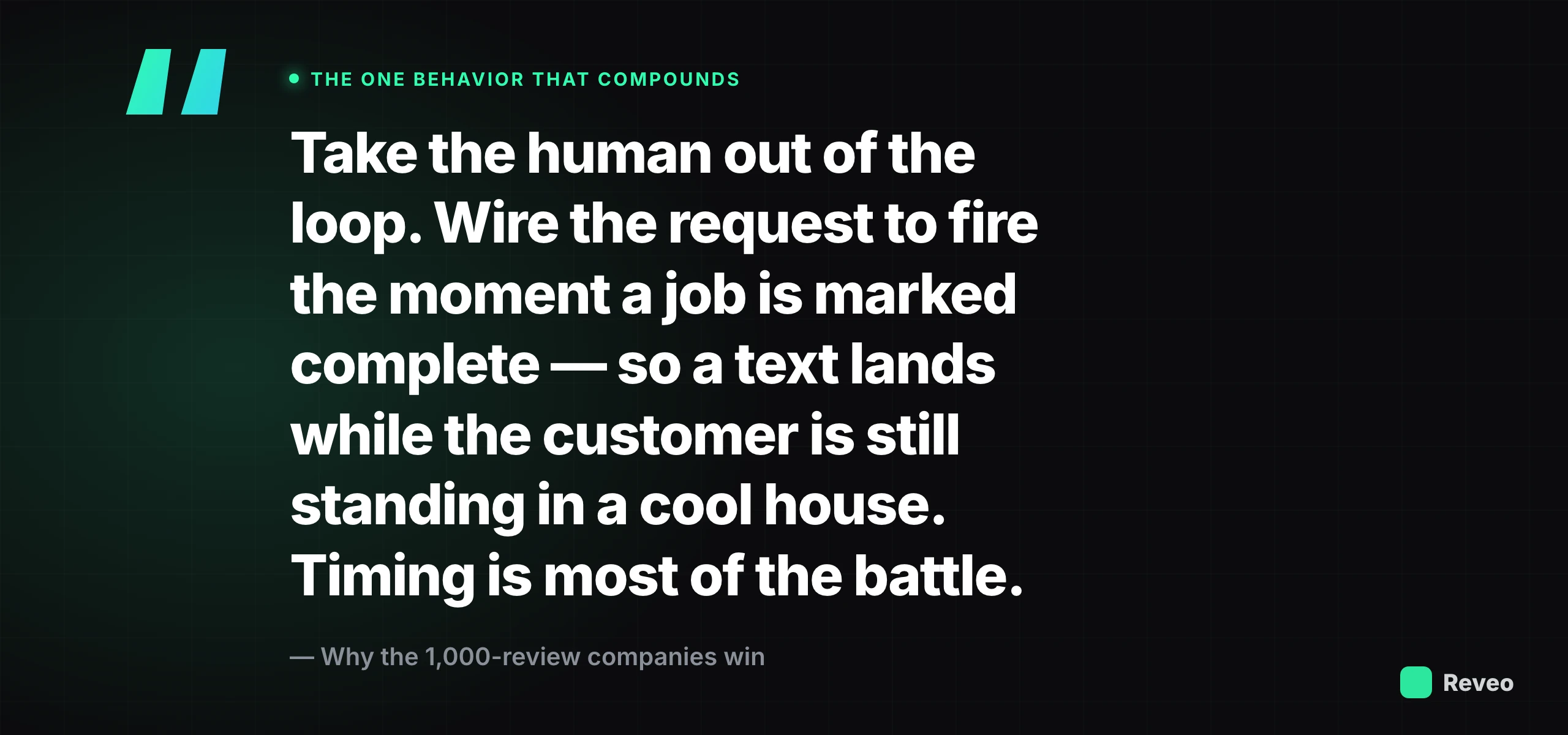
The fix is to take the human out of the loop. Wire the review request to fire the moment a job is marked complete in your field software — FieldRoutes, ServiceTitan, Jobber, Housecall Pro — so a text lands while the customer is still standing in a cool house or a clean kitchen. Timing is most of the battle: a request sent within the hour converts far better than one sent the next day, when the job is already a memory. If you want the mechanics, here’s how to automate review requests so it happens without anyone remembering.
Send it by text, not email. Home-service customers open a text; a review-request email dies in the promotions tab.
When the bad review lands — because it will
Even the best operators get a one-star. A missed window, an off day, a customer you were never going to please. The damage comes less from the review than from two things you control: how you answer it, and how many recent positives are sitting around it.
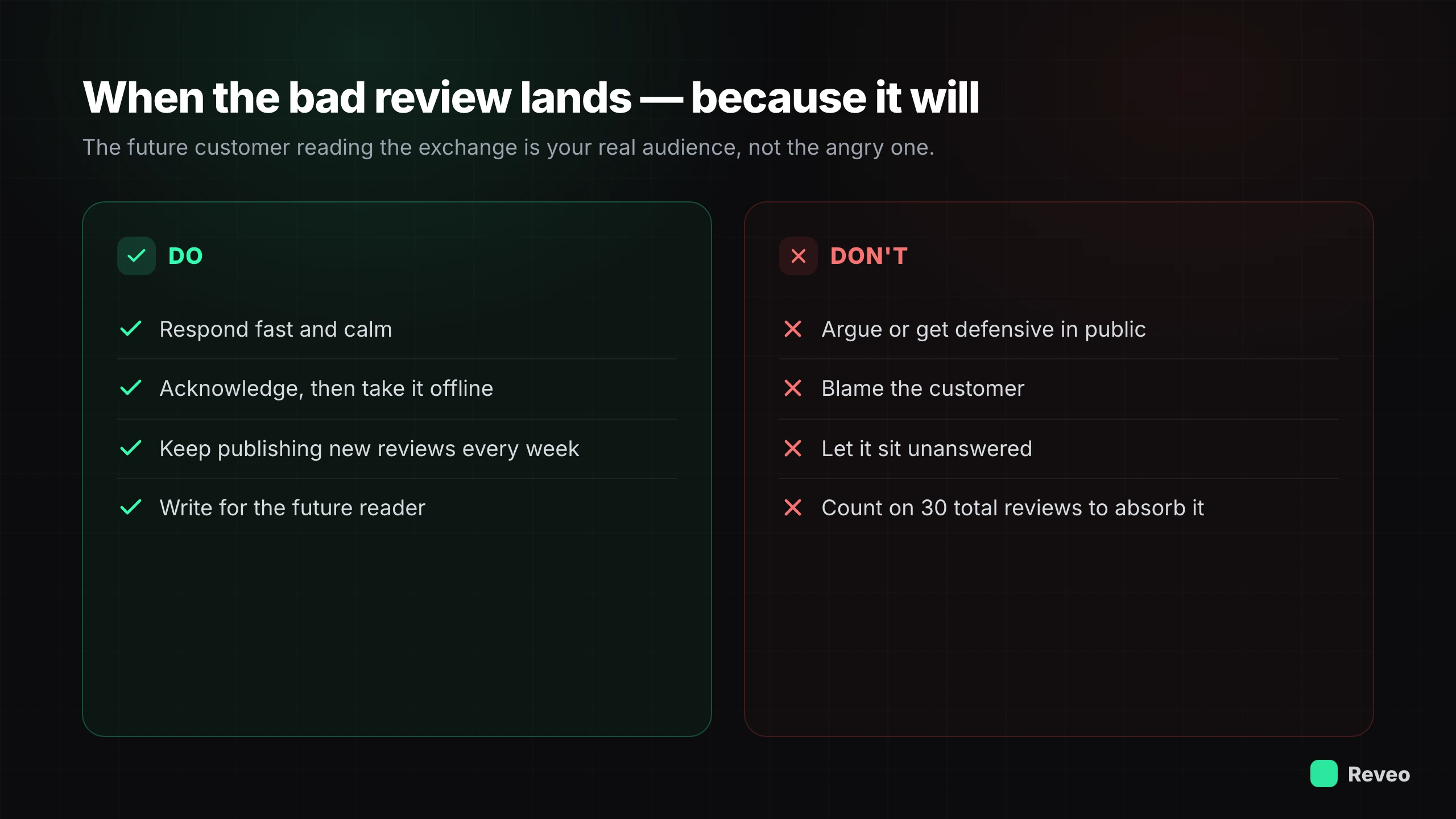
Respond fast and calm — acknowledge, take it offline, never argue in public. The future customer reading the exchange is your real audience, not the angry one. Then out-publish it: a business collecting reviews every week barely feels a bad month, while a business with 30 reviews total feels every single one. Velocity is the best insurance policy there is. When a rough one comes in, work the playbook for responding to negative reviews rather than firing off something you’ll regret.
Where to start this week
You don’t need a strategy deck. You need three moves:
- Turn on automatic review requests for every completed job, sent by text within the hour.
- Reply to every review you haven’t answered — start with the negatives.
- Fix your Google Business Profile so hours, phone, and services are correct everywhere a customer looks.
Do those consistently and your rating, review count, and local ranking start moving together — the same compounding that turned EcoStar’s and Romney’s review counts into a real competitive edge.
Want to see where you stand today? Run a free reputation scan for a snapshot of your reviews, rating, and listings in a couple of minutes.