


The worst way to handle a negative review is to do nothing. Knowing how to handle negative reviews comes down to three moves most owners get backwards: respond calm and fast, fix whatever actually caused it, and keep collecting new reviews so one bad one barely moves your average. Do those and a one-star turns into free proof that you handle problems like a pro — which is exactly what the next customer is checking for.
Dealing with negative reviews feels personal because your name is on the truck. The homeowner reading it three weeks from now doesn’t feel that at all. They’re scanning for one signal: when something went wrong, what did this company do about it? Give them a good answer and you win a customer you’d otherwise have lost to the company one rating spot above you.
First, figure out what you’re actually dealing with
Not every one-star deserves the same reaction. Before you type a word, sort it into one of three buckets, because your move changes with each.
Real feedback. A late window, a missed spot, a price surprise — the customer had a genuine bad experience. This is the most common kind and the most valuable, because it’s fixable and the reply is where you look good. Treat it as a gift you didn’t want.
A frustrated customer overreacting. The facts are thin or exaggerated, but there’s a real person on the other end who felt let down. You still respond with the same calm acknowledgment. Arguing the facts in public loses every time, even when you’re right.
Fake or fraudulent. A competitor, a bot, a name you’ve never billed. Flag it with the platform for removal, then post one measured public reply noting you can’t find a record matching the description. Never accuse the reviewer of lying — a level-headed response does more for you than an angry one, and the removal resolves it either way.
The mistake is reacting to all three as if they’re attacks. Two of them are business as usual; the third is rare. Sort first, then respond.
Respond fast, calm, and for the future customer
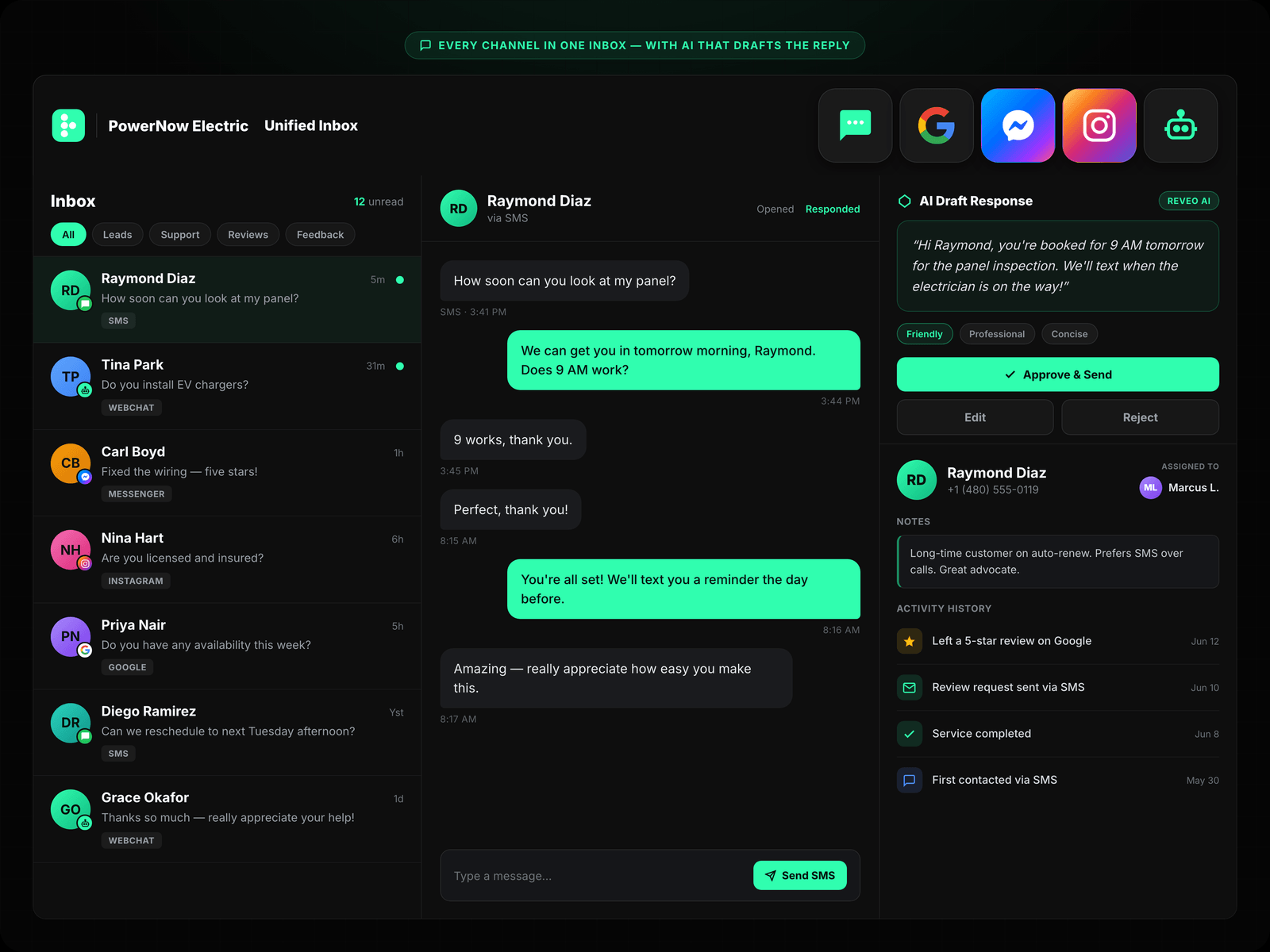
Speed is most of the win. A reply within a day tells both the reviewer and everyone reading later that you’re paying attention; a review that sits unanswered for two weeks reads as a business that doesn’t care. Acknowledge what they said, apologize for the experience even if you’re not at fault, offer a concrete next step, and move the details to a private call or email. Never argue, never blame the customer, never post a defensive “well, actually.”
That’s the shape. For the word-for-word method, the copy-ready templates for the four most common cases, and the recovery workflow that wins the customer back, we broke it down separately: how to respond to negative reviews and recover fast. Keep those templates where your team can grab them so a reply goes out the same business day instead of waiting for you to have a free afternoon.
Fix the root cause, not just the review
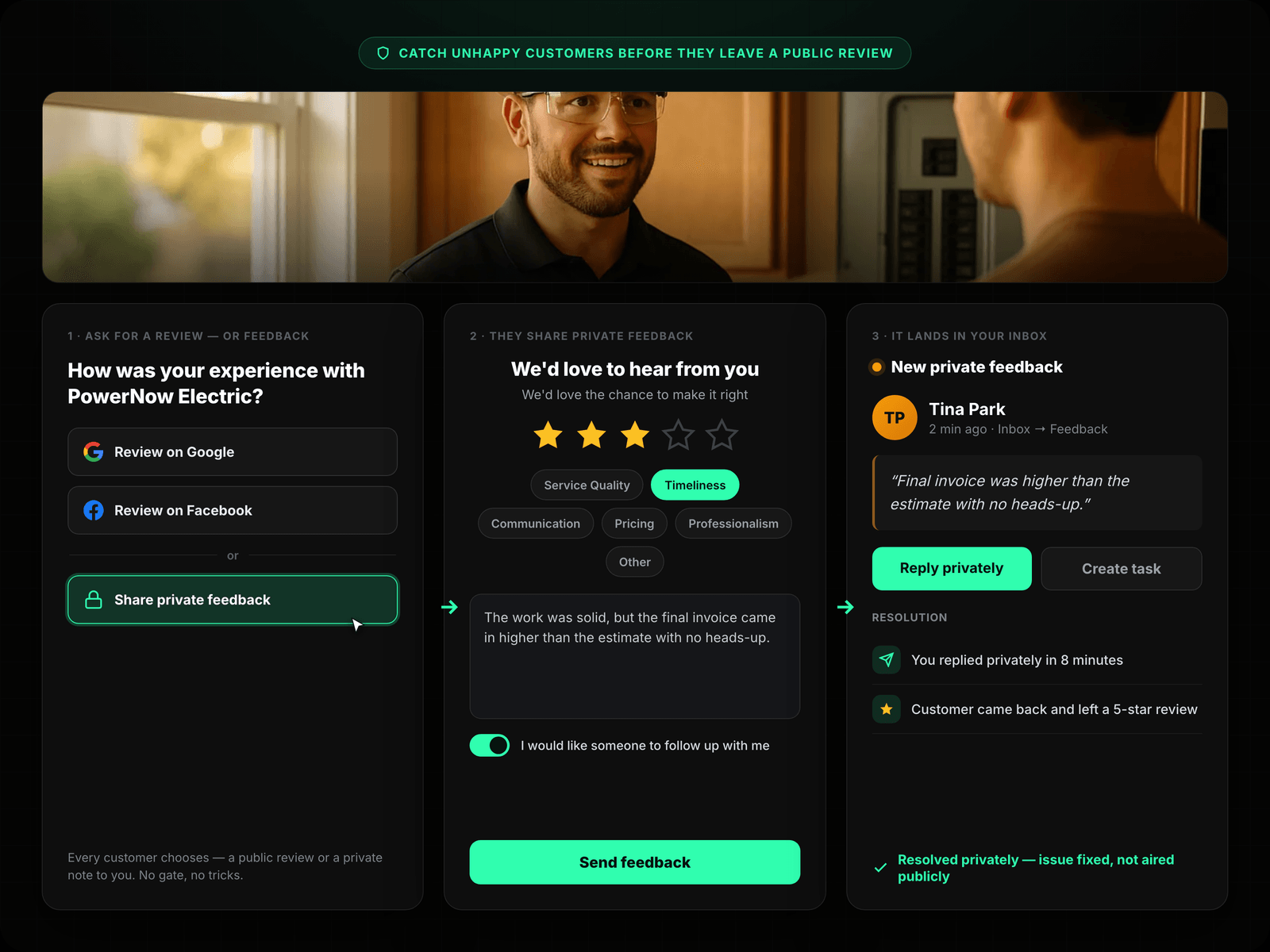
A single bad review is noise. Three reviews saying the same thing is a process problem wearing a costume. When you see the same complaint twice — techs running late, a confusing invoice, a scheduling gap — the fix isn’t a better-worded reply. It’s changing the thing customers keep tripping over, then telling them you did.
This is the part most owners skip, and it’s the part that compounds. Close the gap that produced the review and you stop generating that review. Legion Pest Control’s owner, Brandon Jamison, put the ongoing version of this plainly: “I look at the dashboard once a week. The system runs itself.” That only works once the recurring problems have been designed out, not just apologized for.
Never do these three things
Some “fixes” make it worse. Skip them entirely.
- Don’t pay for or incentivize reviews to bury the bad one. Offering a discount, a freebie, or a contest entry in exchange for reviews violates Google’s and Yelp’s policies and risks your reviews getting filtered or your profile penalized. It also poisons the well — reviews you bought aren’t the social proof that actually convinces anyone. Ask every customer, incentive-free, and let the honest ones stack up.
- Don’t try to delete your way out of it. You generally can’t remove a real customer’s review, and chasing takedowns is wasted energy. The exception is genuinely fake or policy-violating content, which you flag, not the review from the customer you actually let down.
- Don’t go silent. An ignored negative review is the only one that does lasting damage, because it’s the one future customers read as indifference.
The real defense is volume
Here’s the uncomfortable truth about dealing with negative reviews: the best response happens months before the review ever lands. A business collecting reviews every week barely feels a one-star. A business sitting at 30 reviews total feels every single one. The math is blunt — 200 five-star reviews and five one-stars still average 4.9, and the bad one falls off the first page of your profile as fresh ones stack on top.
None of the companies below avoided negative reviews. They made them irrelevant by never stopping the flow of new ones. EcoStar Pest Control built 1,015 Google reviews from a single location. Romney Pest Control built 2,337 across its locations — a base deep enough that any single bad month is a rounding error, and dense enough that it moved the company’s sale valuation. BRD Pest Control grew its review velocity 3.4× in its first 17 days on Reveo. BrightLocal’s annual local-consumer survey has found for years that the large majority of people read reviews before choosing a local business — which means the difference between a 4.9 and a 4.3 is the difference between getting shortlisted and getting skipped.
The engine behind all of it is the same one move: ask every customer, every job, automatically, by text, while the experience is still fresh. Our reputation-management playbook covers how to wire that ask to your field software so it fires on its own — which is also what makes recovery cheap.
Monitor so you’re never blindsided
You can’t handle a review you don’t know exists. Set an alert so a new negative reaches you the same day, not the next week, and check Google, Facebook, and the sites your industry actually gets reviewed on. A review answered within hours often defuses the situation before it hardens; the same review found a week later has already done its quiet work on everyone who scrolled past it. Reveo pulls new reviews across your platforms into one dashboard and pings you the moment a negative lands, so speed stops depending on whoever remembers to check.
Handled this way, a bad review stops being a threat and starts being a chance to look good in public — in front of exactly the people deciding whether to call you.
Want to see where you stand right now? Run a free reputation scan for a snapshot of your reviews, rating, and how fast you’re responding — in a couple of minutes.