


A negative review is not the problem — a slow, defensive, or missing response is. Here is how to respond to negative reviews so you protect your rating, calm the person who wrote it, and show the next hundred people reading your profile that you handle problems like a pro.
The reviewer is almost never your real audience. The audience is the homeowner three weeks from now, comparing you against two other companies, who scrolls to your one-star review to see what you did about it. A calm, specific reply to a bad review often builds more trust than a wall of spotless 5.0s that looks too clean to be real. This is the workflow we run for the pest-control, plumbing, and pest franchises we work with: respond fast, resolve it privately, then out-publish the negative until it barely registers.
What a negative review actually costs you
Ignoring a bad review is the expensive move, not answering it. An unanswered one-star review does three things quietly, every day it sits there.
It drags your average toward the line customers use to filter. BrightLocal’s annual local-consumer survey has found for years that the large majority of people read reviews before choosing a local business, and that a business’s star rating is one of the top factors in whether they’ll consider it at all. A cluster of unanswered negatives can pull you under a 4.0 and eliminate you from the shortlist before anyone clicks.
It reads as an inactive business. Google’s local ranking rewards engagement, and responding to reviews is engagement it can see. A profile where every review — good and bad — gets a reply signals a business that’s paying attention. A wall of silence signals the opposite.
And it wastes a recovery you’ll never get back. The one reviewer might update their review; the future readers definitely form an opinion. Both of those are still on the table the day the review lands. They’re gone the week it sits ignored.
Respond within 24 hours — the five-step method
Use the same five steps every time, whether the review is fair, exaggerated, or completely fabricated. The full negative-review response playbook goes deeper on the edge cases; this is the core loop.
1. Reply within 24–48 hours. Speed is most of the win. Set an alert so a new negative review reaches you the same day, not next week, and answer the same business day when you can. A fast reply defuses the situation before it hardens.
2. Acknowledge what they said. Show you actually read it. Skip the defensive opener and the “actually, what happened was…” — nobody reading it later is on your side when you argue. Name their experience back to them first.
3. Apologize for the experience, even if you’re not at fault. “I’m sorry your service didn’t go the way it should have” costs you nothing and admits nothing. It tells the reviewer — and every future reader — that you take this seriously instead of getting defensive.
4. Offer a concrete next step. A redo, a refund, a call — give them something real. “We’ll do better” is hollow. “Call me at [phone] today and I’ll get a tech back out” is a business owner solving a problem in public.
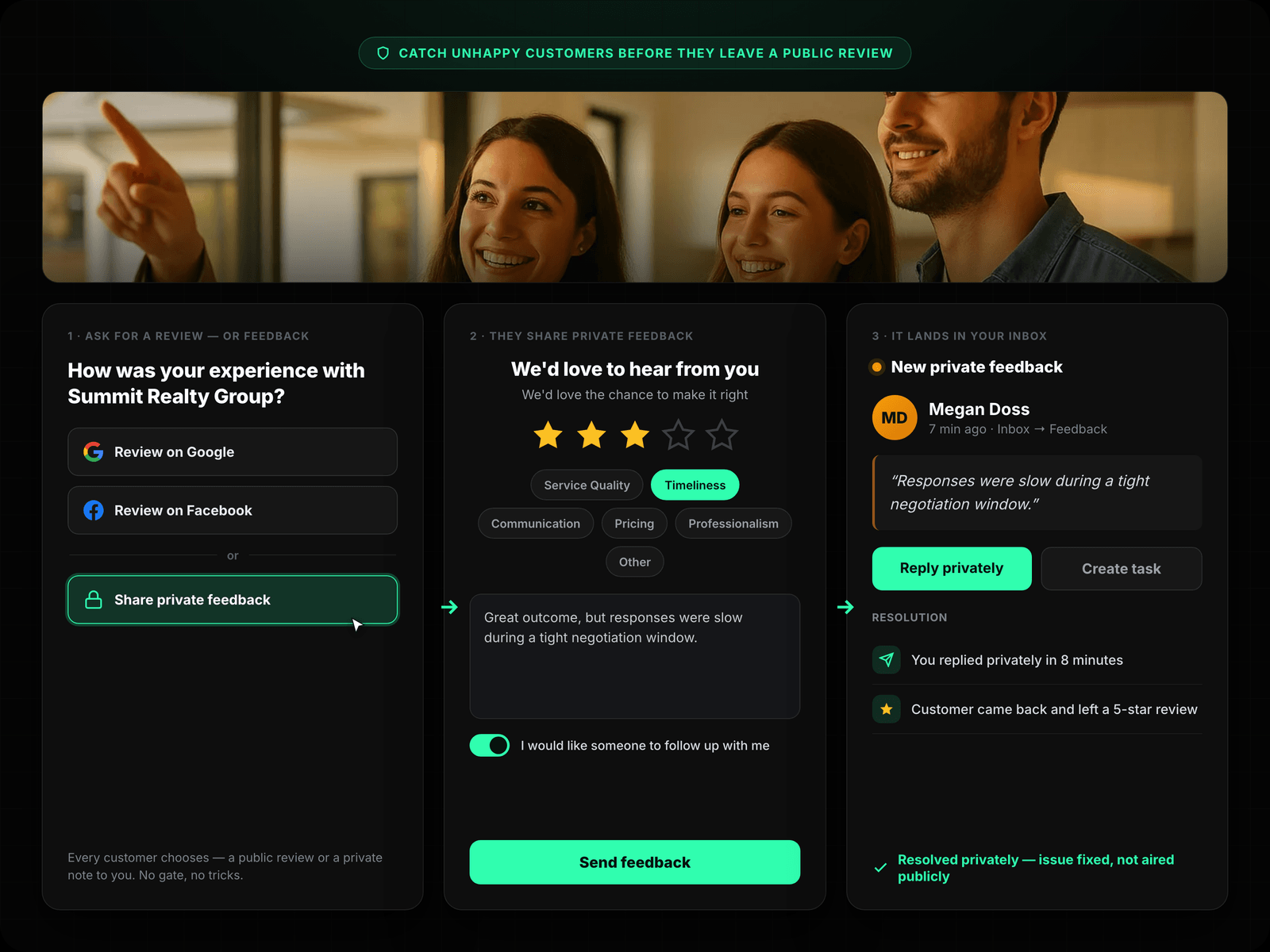
5. Take it offline. Put a name, a direct number, or an email in the reply and move the details to a private conversation. You avoid a public back-and-forth, and you show everyone watching that you’d rather fix it than win the thread.
One rule underneath all five: you’re writing for the future customer, not the reviewer. Read every draft with that person in mind before you post it.
Copy-ready templates for the four most common cases
Start from these and swap in the specifics. Each follows the acknowledge → apologize → offer → take-it-offline shape above. Generic beats nothing, but the more you reference the actual job, the more real it reads.
Service delay
Hi [Name], I’m sorry your service ran late — that isn’t the standard we hold ourselves to, and I understand the frustration. I’d like to make it right. Please call me directly at [Phone] and I’ll take care of it today.
Quality concern
Hi [Name], thank you for the honest feedback. We take the quality of our work seriously and we clearly missed the mark on this one. I want to understand exactly what happened and fix it — please email me at [Email] and I’ll follow up personally.
Pricing dispute
Hi [Name], I hear you on the cost, and I appreciate you raising it. Our pricing reflects [brief, specific value point — e.g. licensed techs and a return-visit guarantee], but if the value didn’t match what you paid, I want to talk it through. Reach me at [Phone].
No-show / missed appointment
Hi [Name], we missed your appointment and that’s on us — no excuses. I’ve already addressed it with the team. Please call me at [Phone] and I’ll reschedule at whatever time works for you and make this right.
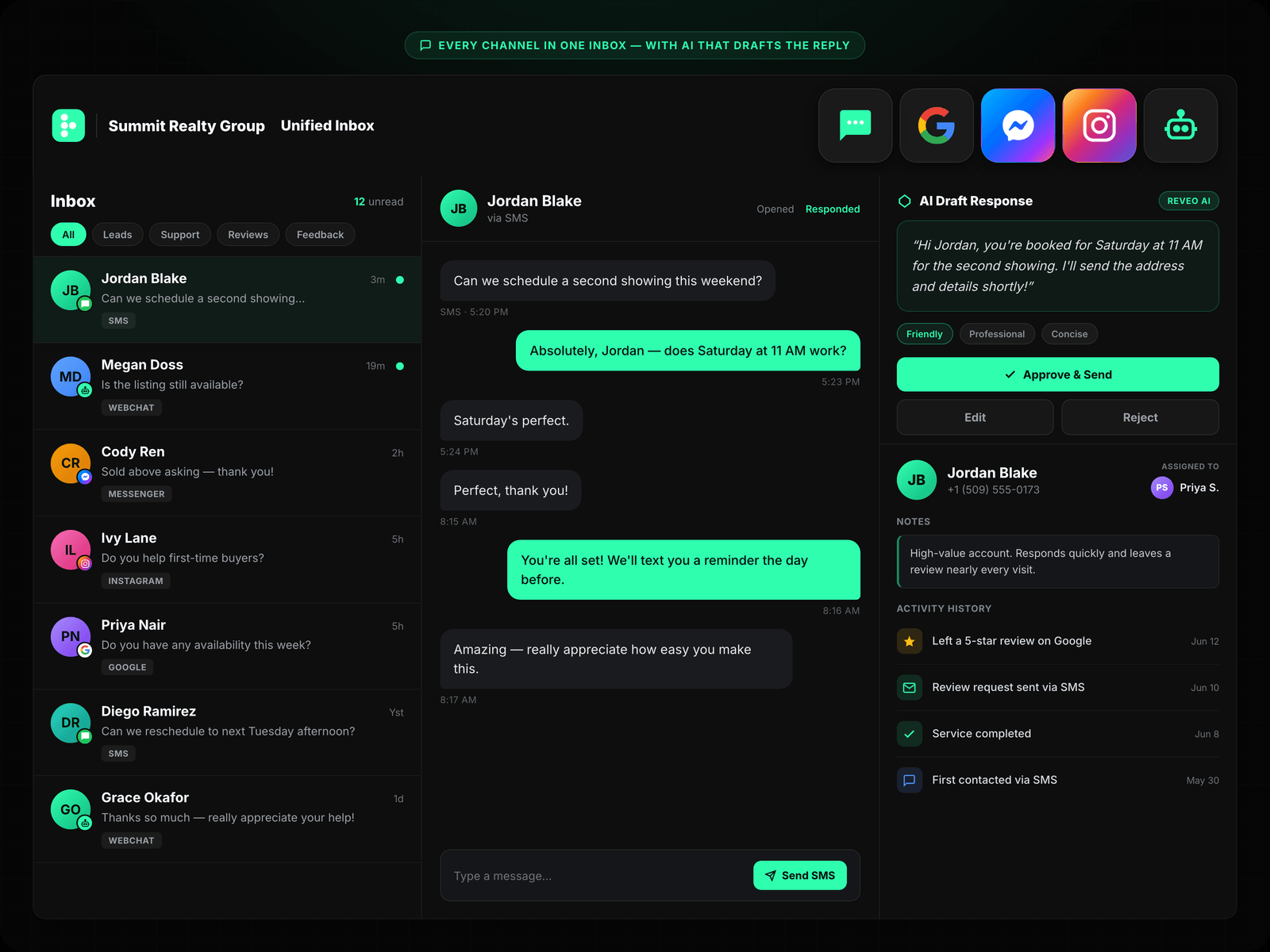
Notice what none of them do: argue, blame the customer, or promise something vague. Reveo’s AI can draft a reply in this shape for each review automatically — pulling the specifics from the review and matching your brand voice — so instead of writing every response from a blank box, your team reads it, tweaks a line, and approves. You stay in control of the words; you just skip the staring-at-a-cursor part.
After the response: how you actually recover

The reply is the first half. Recovery is the second, and it’s where most businesses stop too early.
Ask for the update — once, after you’ve earned it. Once the issue is genuinely resolved, it’s fine to ask the customer whether they’d be open to updating their review. Many will, especially when the fix beat their expectations. Never pay for it, never pressure, never make the ask before you’ve fixed anything. If they don’t update it, the public thread still did its job for every future reader.
Out-publish it with volume. The most reliable way to shrink a negative review is to bury it under recent positives. The math is blunt: 200 five-star reviews and five one-stars still average 4.9, and the bad one falls off the first page of your profile as fresh reviews stack on top. A business collecting reviews every week barely feels a one-star; a business sitting at 30 total feels every one.
That’s not theory. Romney Pest Control built 2,337 reviews across its locations — a base deep enough that any single bad month is a rounding error. EcoStar Pest Control reached 1,015 from one location. BRD Pest Control grew its review velocity 3.4× in its first 17 days on Reveo. None of those companies avoided negative reviews; they made them irrelevant by never stopping the flow of new ones. The engine behind that — asking every customer, every job, automatically — is the same one that makes recovery cheap. Our reputation-management playbook covers how to wire it to your field software so the ask fires on its own.
Where to start this week
You don’t need a crisis plan. You need three things running before the next bad review lands:
- Turn on review alerts so nothing sits unseen longer than 24 hours.
- Save the four templates above where your team can grab them, and answer any negative reviews you’re currently ignoring — oldest and worst first.
- Turn on automatic review requests so a steady stream of positives is always diluting the negatives before they matter.
Do those and one bad review stops being a threat and starts being a chance to look good in public. If you want to see how you’d handle it end to end — monitoring, AI-drafted responses you approve, and the review-request engine that buries the negatives — book a live Reveo walkthrough and set it up in an afternoon.
Want the mechanics of replying to every review, not just the bad ones? Read how to respond to reviews.