


How to respond to reviews comes down to two things: reply to every one, and match your tone to the star rating. A five-star review gets a warm, specific thank-you. A one-star review gets a calm, professional reply written for the next customer reading it — not the angry one who left it. Get those two habits down and your replies do real work: they build loyalty, defuse damage, and tell Google you’re an active business worth ranking.
The reply is public. Every prospect who lands on your Google Business Profile sees not just what a customer said, but how you answered. A thoughtful response to a bad review can change more minds than the review itself. Below are the templates, timing, and tone rules for handling every review you get — good, bad, and unfair.
Reply to every review, and reply fast
Respond within 24 to 48 hours. Google has confirmed that responding to reviews can improve your local visibility, and speed matters to the person who left it — a reply two weeks later reads as an afterthought. For negative reviews, faster is better: the sooner you answer calmly, the less time a one-star sits there unaddressed while prospects scroll past.
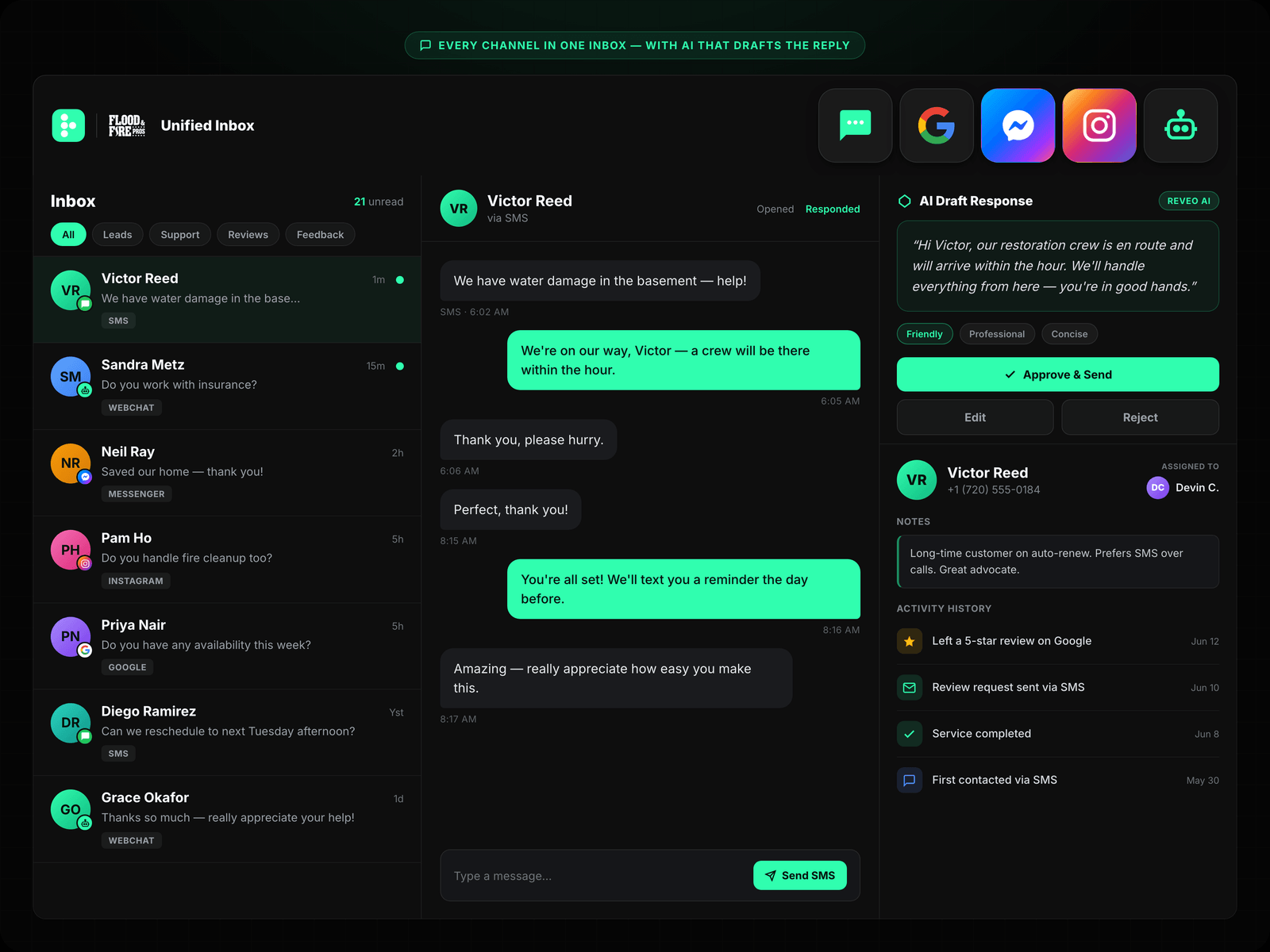
You don’t have to respond to literally every review by hand — but every review should get a response. There’s a difference. A company like EcoStar Pest Control, which built over 1,000 Google reviews on a single location, can’t hand-write a reply to each one and keep up with the trucks. The businesses that stay on top of it treat responding as a system: alerts when a review lands, a draft ready to edit, and a person who approves and sends. That’s what makes full coverage realistic instead of aspirational.
How to respond to positive reviews
A positive review is a gift and a marketing asset. A generic “Thank you for your review” wastes it. Three moves make a reply feel real:
- Use their name. “Thanks so much, Sarah!” lands. “Thank you for your feedback” reads like a form letter.
- Name the specific job. “Glad the AC install went smoothly and the house is finally cool” proves you remember them.
- Invite them back. “We’d love to handle your furnace tune-up this fall” turns a one-time job into a repeat customer.
Match the warmth to the rating. A five-star review can take a little enthusiasm; a four- or three-star review is a signal to stay gracious and ask what would have earned the extra stars.
5-star reply:
“Thanks so much, Sarah! We’re thrilled the AC installation went smoothly and your home is finally cool and comfortable. It was a pleasure working with you — reach out anytime it’s time for a tune-up.”
4-star reply:
“Thank you, Mike! Glad we could get your plumbing fixed fast. If there’s anything we could’ve done to earn that fifth star, we’d genuinely like to hear it — we’re always trying to get better.”
3-star reply:
“Thanks for the honest feedback, Lisa. We appreciate you taking the time. We’d like to understand what fell short — give us a call at (844) 410-3050 and we’ll make it right.”
The four- and three-star replies do double duty: they thank the customer and open a door to fix whatever kept it from being a five. A middling review you engage with often becomes a better one. Want more starting points, including a separate thank-you for the customer directly (not just the public reply)? 7 customer thank-you templates cover post-review, post-service, and a few other moments worth acknowledging.
How to respond to negative reviews
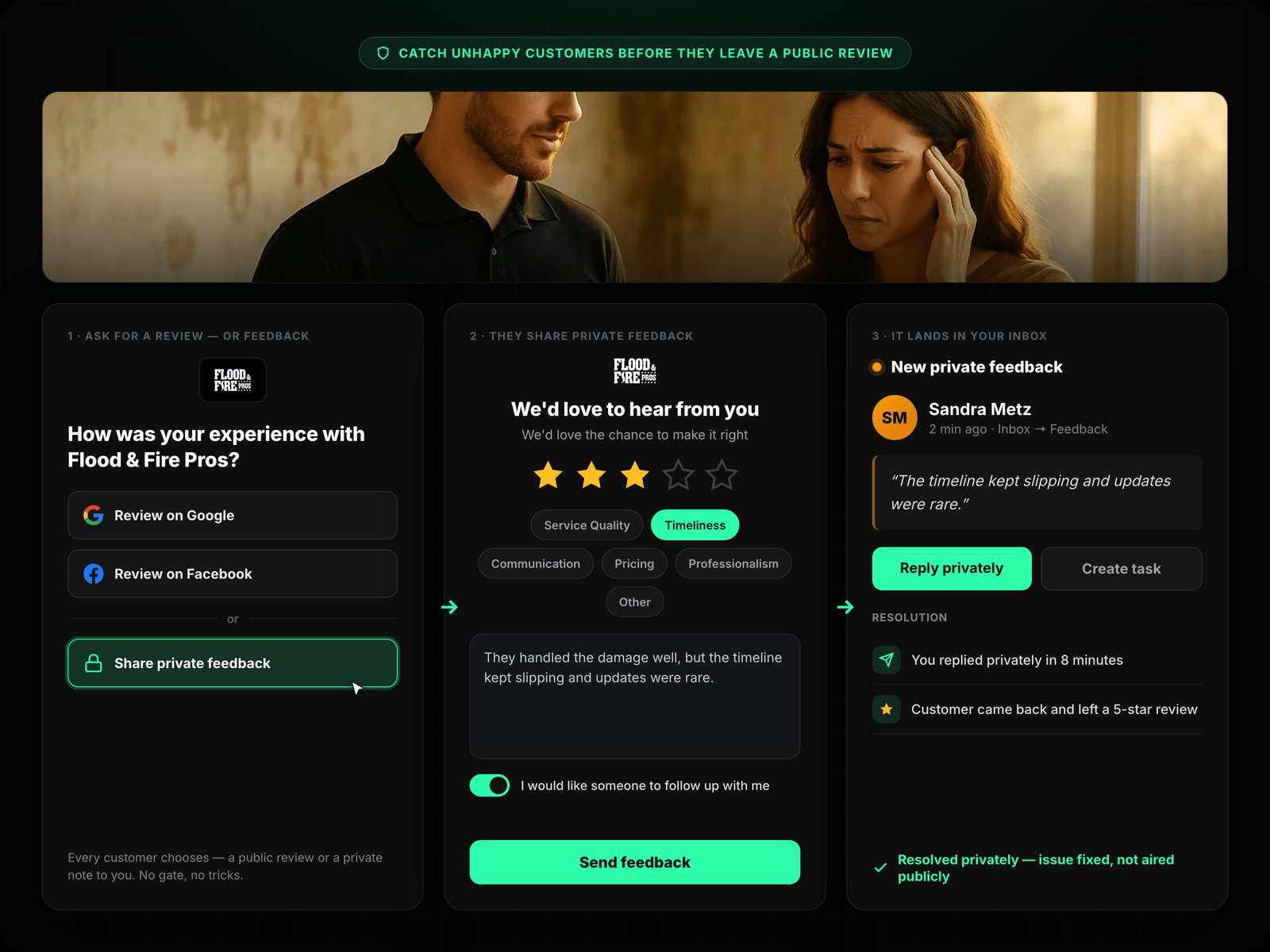
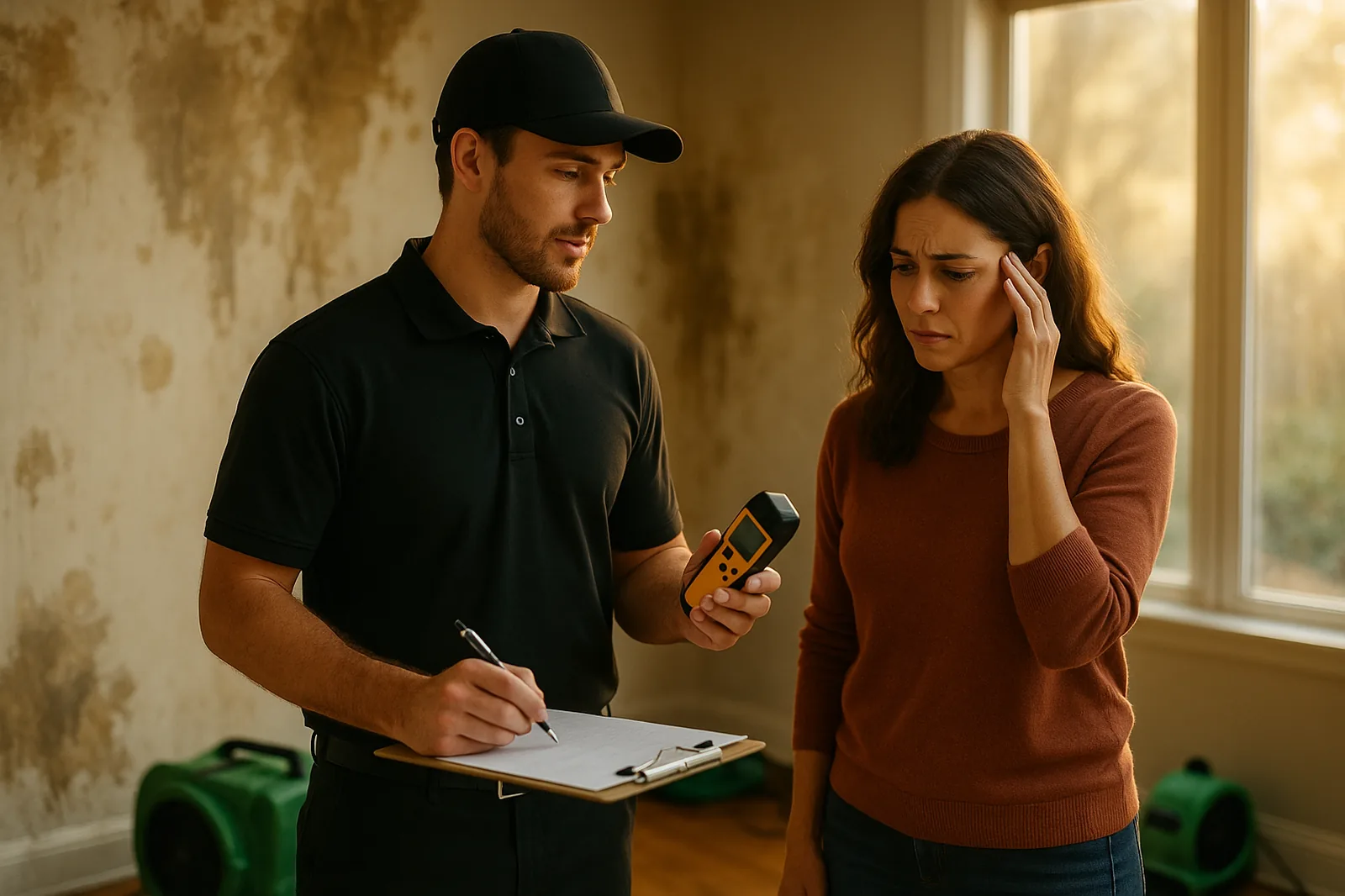
A bad review stings, but how you answer it matters more than what it says. Future customers judge you on the response. Four rules:
- Cool off first. Never reply angry. Wait 30 minutes, or overnight for a nasty one. The reply is for the next reader, not the reviewer.
- Acknowledge, don’t deflect. “We’re sorry your experience didn’t meet expectations” beats a wall of excuses every time.
- Show empathy even when you disagree. “We understand your frustration” costs you nothing and signals you’re reasonable.
- Take it offline. “Please call us at (844) 410-3050 so we can make this right” moves the argument out of public view and shows you want to resolve it.
1-star reply:
“We’re really sorry to hear about your experience, David. This isn’t the level of service we hold ourselves to. We’d like to make it right — please reach us directly at (844) 410-3050 so we can understand what happened and fix it.”
2-star reply:
“Thank you for the feedback, Jennifer. We’re sorry for the scheduling trouble. We’ve addressed it internally and would like a chance to earn your trust back — please reach out at your convenience.”
The one thing that never works: arguing the facts in public. Even when the customer is wrong, a defensive reply makes you look like the problem to everyone reading later. If you need to correct the record, do it factually and briefly, then pivot to taking it offline. For a deeper walkthrough of tough cases — fake reviews, extortion attempts, complaints you can’t verify — see our guide to responding to negative reviews and the negative-review response playbook.
Reusable response patterns
You don’t need a script for every review, but a few patterns keep your replies fast and consistent across whoever’s hitting send:
- The grateful reply (5-star): “Thank you so much, [Name]! We’re thrilled [specific detail]. Our team loved working with you — we’re here anytime.”
- The recovery reply (1–2 star): “We’re sorry to hear this, [Name]. We take it seriously and want to make it right. Please reach us at [phone] so we can talk it through.”
- The nudge reply (3-star): “Thanks for the feedback, [Name]. We’d love to earn that fifth star next time — can you tell us what we could improve?”
- The referral reply (glowing): “Wow, thank you, [Name]! Reviews like this make our day. If you know anyone who needs [service], we’d love the introduction.”
Fill in the brackets with the customer’s name and the actual job. The specifics are what separate a reply that builds trust from one that reads like it came out of a template — even when it did.
Let the system carry the volume
Once you’re getting reviews steadily, replying by hand every day gets old fast, and that’s when coverage slips. Reveo’s AI review response tool reads each review’s content and tone, then drafts a reply in your brand voice for you to approve and send — so a task that ate 30 minutes a day takes about five. Alerts make sure a new negative review reaches you the same day instead of the next week, which is exactly when a calm, fast response matters most.
The point isn’t to automate away the human part — it’s to make responding to every review realistic so you’re never the business with 40 reviews and zero replies. That gap is visible to every prospect who checks you out.
Want to see how your current reviews and replies stack up? Run a free reputation scan for a snapshot of your rating, review volume, and where the gaps are — in a couple of minutes.