


Most car buyers decide which dealerships to trust before a single salesperson says a word. They open Google, read a handful of auto dealership reviews, glance at the star rating, and build a shortlist of two or three stores — and the ones with fifteen recent reviews rarely make the cut against the store with four hundred. Winning that silent comparison is what dealership reputation work is actually about.
A dealership has an advantage most local businesses don’t: two review engines, not one. Sales writes a review every time a car gets delivered. The service lane writes one every time a customer picks up a repair. Run both on purpose and you build review volume no single-transaction business can match. Ignore the service side and you leave most of your reputation on the table.
Two profit centers, two review moments
The single biggest reason a dealership’s review count stalls is that it only asks the sales customer, and only sometimes. Fixed ops — service and parts — sees far more customers per month than the showroom does, and each one is a review you’re not collecting.
The timing that works is different for each:
- Sales: the delivery handoff. Ask when the buyer has the keys, the paperwork is signed, and they’re happier than they’ll be at any other point in the relationship. Not a week later by email, when the payment has cleared and the excitement is gone.
- Service: the vehicle pickup. The advisor hands back the keys, the car is fixed, the bill wasn’t a surprise. That’s the window. A service review is worth as much as a sales review to a buyer researching where their car will be safe.
Miss either window and the ask gets weaker by the hour. A request that lands while the customer is still in the lot converts far better than one sent the next day.
Make the ask automatic, or it won’t happen
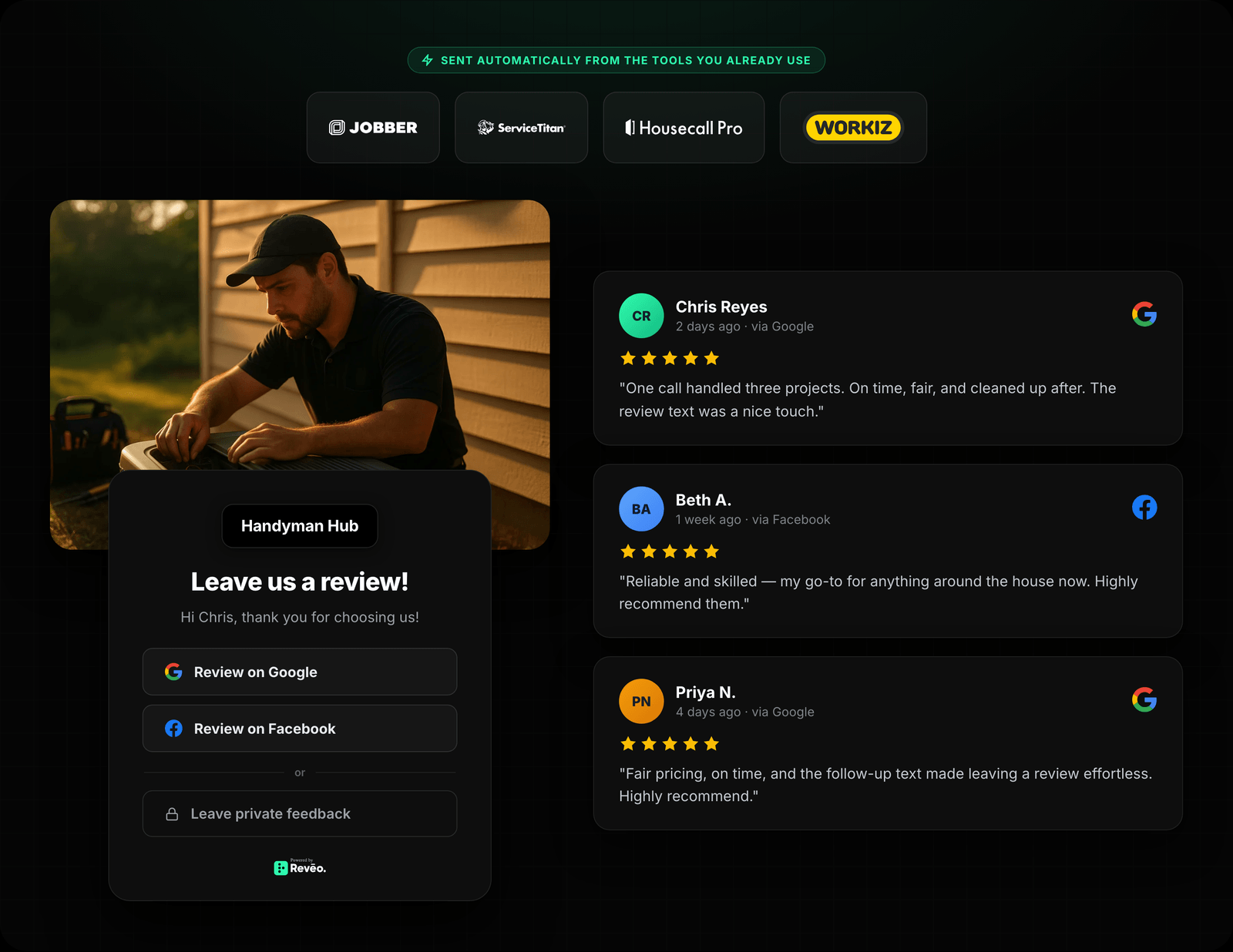
Here’s the real problem: your best F&I manager and your busiest service advisor are the two people least likely to remember to ask for a review. They’re moving to the next deal, the next RO. The fix is to take the person out of the loop entirely.
Wire the review request to fire automatically off your CRM or DMS — VinSolutions, DealerSocket, CDK, Reynolds — the moment a deal is marked delivered or a repair order is closed. The text goes out on its own, at the right moment, every time, without anyone remembering. That’s the whole difference between the store with 400 reviews and the one stuck at 60: the first one made it a system, the second left it to whoever remembered. Automating the review request is the lever that moves everything else.
Send it as a text, not an email. People open texts; car-deal follow-up emails go to the same graveyard as the extended-warranty offers. The message should be short, from a name the customer recognizes, and one tap to leave the review — not a login, not a survey.
Where dealership reviews actually live
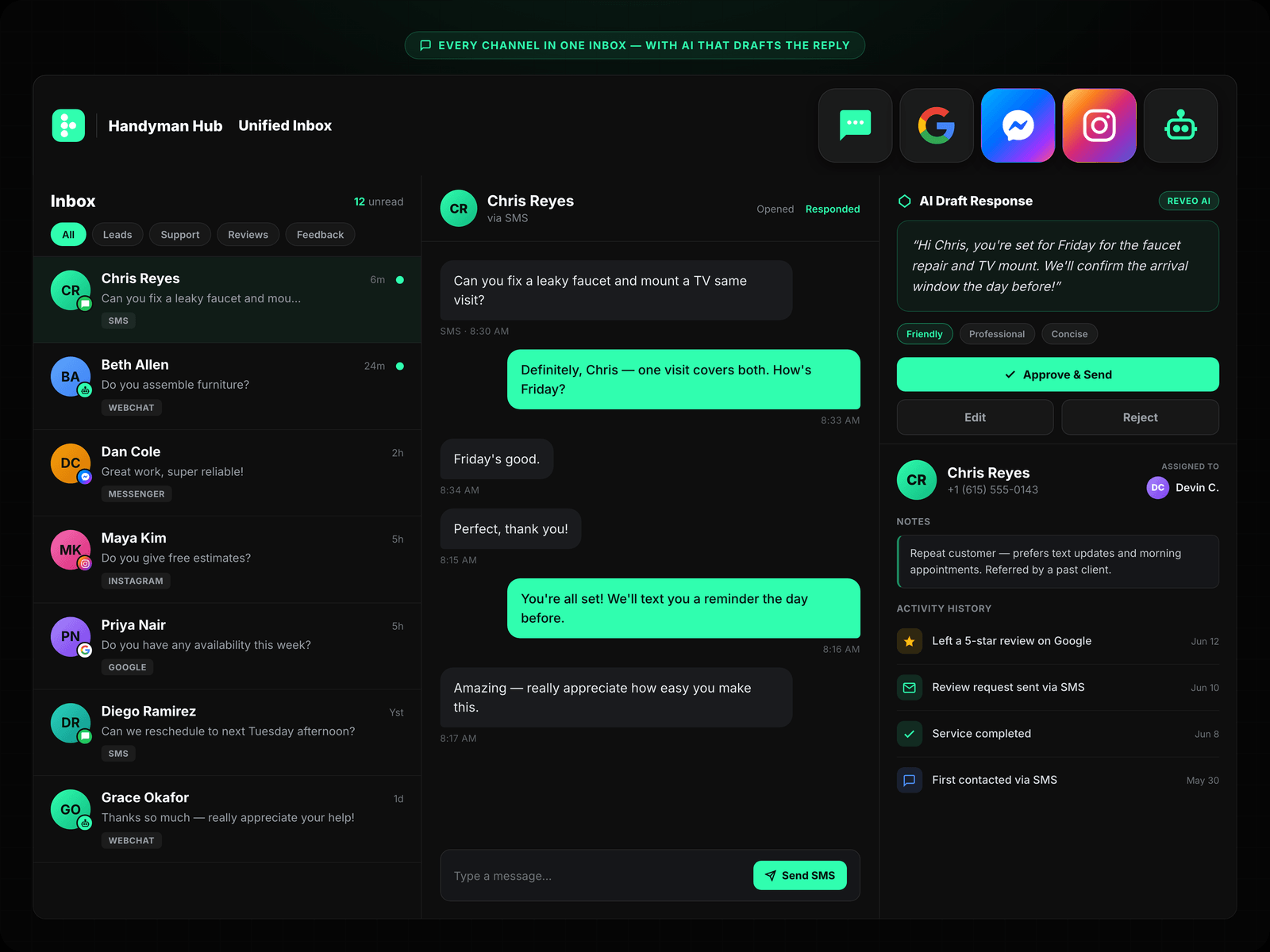
Buyers don’t check one platform, so you can’t either. Prioritize in this order:
- Google Business Profile — the one every buyer sees first and the one that feeds local search. Claim both your sales and service profiles if you run them separately, and keep hours, phone, and departments accurate. Start with your Google Business Profile; it’s the one listing every store should get right first.
- DealerRater and Cars.com — automotive-specific platforms buyers use precisely because they’re shopping for a car. DealerRater lets customers rate individual salespeople, which is worth paying attention to.
- Facebook and Edmunds — where a chunk of researchers cross-check before they drive over.
You don’t need to be everywhere at once. Get Google and one automotive platform right first, then expand.
Respond to everything — especially the one-stars
A reply to a five-star review costs thirty seconds and tells the next reader you pay attention. A reply to a one-star review matters more, because future buyers judge how you handled it, not just what happened. This is where a lot of dealerships blow it — going defensive in public over a finance dispute or a “they wouldn’t budge on price” complaint reads worse than the original review.
Keep it simple:
- Stay calm, always. Never argue price or terms in the reply. The audience is the next buyer, not the reviewer.
- Acknowledge and take it offline. Give a name and a direct line. “Call our GM, Maria, at [number]” beats a wall of corporate apology.
- Fix the pattern. If three reviews mention the same F&I add-on pressure or the same service wait, that’s a process problem, not a review problem. The reviews are telling you where the money leaks.
The full method for handling the tough ones is in our guide to responding to negative reviews.
Volume is the real reputation insurance
Even great stores get bad reviews — a deal that fell through, a comeback on a repair, a customer you were never going to please. The damage isn’t the review itself; it’s having so few reviews that one bad one drags your average. A store collecting reviews from both sales and service every week barely feels a one-star. A store with 30 total reviews feels every one.
That’s the case for continual collection, not a once-a-quarter push. Newer reviews also carry more weight with buyers and with Google’s ranking — a wall of reviews from two years ago signals a dealership coasting, not one serving happy customers this week.
Once you’re collecting steadily, put the best reviews to work. Embed them on your VDPs and your homepage, feature them in your ads, pull the ones that name a salesperson by request. The trust that wins the click on Google wins it on your own site too. If you want the broader data on why this works, our review statistics roundup has the numbers.
Where to start this month
You don’t need a reputation project. You need three moves:
- Turn on automatic review requests off your CRM and DMS — both the delivery event and the closed RO, sent by text the same day.
- Reply to every review you haven’t answered, starting with the negatives, and take each one offline.
- Fix your Google Business Profile so hours, phone, departments, and photos are current.
Do those consistently and your rating, your review count, and your local ranking start moving together — the compounding that separates the dealership at the top of the map pack from the three below it.
Want to see where your store stands today? Run a free reputation scan for a snapshot of your reviews, rating, and listings across the platforms buyers actually check.